Thermograph
Historical document, translated for reference. It reflects medical knowledge of the 1920s–30s and is not medical advice.
Summary
A thermograph is an automatic instrument for recording air temperature. It is widely used in meteorology, industry, and public health to monitor environmental conditions continuously.
Encyclopedia article (1928–1936)
Thermograph, a self-recording instrument for the automatic registration of air temperature; it finds wide application everywhere where continuous systematic observations of air temperature fluctuations are required, for example at meteorological stations, in research institutes, in factory laboratories, and in sanitary practice when investigating the thermal regime in dwellings, cold storage warehouses, etc. Thanks to the automatic recording of temperature fluctuations, the Thermograph makes it possible to obtain a continuous curve that accurately characterizes the temperature conditions at any given moment of observation. In this way, random errors that often occur in individual readings and recordings of a conventional thermometer are absent. The most widespread are thermographs of the Richard system, which consist of a small metal box with a glass front wall (Fig. 1). Inside the box is a drum driven by a clockwork mechanism. A sheet of paper is fitted to the side surface of the drum, uniformly divided by transverse lines into degrees Celsius and by vertical lines into days of the week, each day having further small divisions corresponding to the 24 hours of the day. On this sheet, the Thermograph's pen fixes the existing air temperature at any given moment. The temperature element is located outside the instrument and consists of a flattened curved metal tube inside which a liquid (alcohol) is hermetically sealed. When the air temperature changes, the liquid expands or contracts accordingly, causing the curvature of the curved tube to change. These changes are transmitted by a system of levers to a long rod equipped with a writing pen, which, touching the paper fitted on the drum, leaves an ink trace on it. Since the clockwork mechanism forces the Thermograph's drum to rotate so that the pen passes 24 vertical divisions of the ruled paper during the day, a curve is obtained on it during the day, each point of which exactly corresponds to a specific day and hour of observation. Depending on the design, the Thermograph drum can make a full revolution in one day or in seven days. In the first case, the temperature curve is more detailed, but in such a Thermograph, during prolonged observations, it is necessary to wind the clockwork mechanism daily and to change the ruled paper sheet daily; in the second case, the drum is wound only once a week and the sheet is changed once a week, on which a curve for the whole week is obtained (Fig. 2). The accuracy of a good Thermograph's readings under average temperatures does not exceed 0.2°, while at temperatures below 0 and above 50°, errors can reach 0.5°. During observations, the instrument is set up so that the surrounding air, the temperature of which needs to be registered, freely flows around the temperature element. Nearby there must not be strongly heated or cold objects that could have a harmful influence on the Thermograph's readings due to the action of radiant heat. Depending on its purpose, Thermographs can be manufactured in different sizes, and the amplitude of temperature readings can also vary over a wide range, for example from -35° to +15°, from -10° to +70°, from 0° to +120°, etc. In recent times, at meteorological stations, resort laboratories, and scientific institutes, instruments can often be found in which the Thermograph, hygrograph (see), and barograph (see) are combined together, making it possible to register temperature, humidity, and barometric pressure at the moment of observation on one sheet of paper. Such an instrument is shown in Fig. 3. Some authors call it a meteorograph.
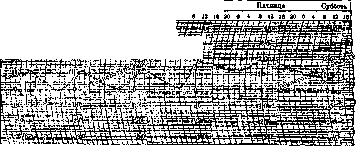

Fig. 1 Richard Thermograph: a- temperature element with alcohol; b- lever with writing pen; c- drum with ruled paper.
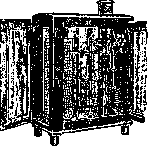
Fig. 3 Meteorograph: a- lever for registering temperature; b- humidity; c- barometric pressure.
Fig. 2 Thermograph recording.
Price.
Ignatov.
Related articles
Mentioned in
Cite this page
“Thermograph.” Soviet Medical Encyclopedia. English translation of Bolshaya Meditsinskaya Entsiklopediya, 1st ed. (Moscow, 1928–1936), ed. N. A. Semashko. https://sovietmedicalencyclopedia.pages.dev/article/thermograph/