Annelid Worms
Historical document, translated for reference. It reflects medical knowledge of the 1920s–30s and is not medical advice.
Summary
Annelid worms (Annelida) constitute a class of the phylum Vermes characterized by metameric body segmentation. They possess a complete digestive tract, a ventral nerve cord, metanephridia, and a closed circulatory system with a true coelom.
Encyclopedia article (1928–1936)
ANNELID WORMS, or annelids (Annelides), a class of the phylum Vermes and the subphylum Trochophoridae. The body is divided by transverse septa into numerous segments, or metameres, as a result of which most organs exhibit a metameric structure—the most characteristic feature of annelid worms. They are divided into two subclasses: the chaetopod annelid worms (Chaetopoda), containing the orders Archiannelida, Polychaeta, and Oligochaeta, and the leeches (Hirudinei). Archiannelids and polychaete annelid worms inhabit seas, while oligochaetes live in fresh water and on land (for example, all earthworms). The body of an annelid worm frequently bears appendages: a pair of sensory tentacles on the anterior or head segment, and muscular tubercle-like parapodia, or primitive limbs, on the remaining segments. Parapodia are provided with bundles of horny setae, and sometimes also with delicate branched processes—cutaneous gills. The gut is complete, often differentiated into several sections. The nervous system consists of a suprapharyngeal ganglion and a ventral nerve cord; the excretory system consists of metameric segmental organs, or metanephridia; a closed circulatory system is present; the body cavity is secondary, or coelomic. Polychaete (Figure 1) annelid worms are dioecious, while oligochaetes are hermaphroditic, with very
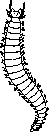
Figure 1. See
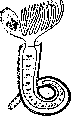
Figure 2.
In Annelid Worms—a complex reproductive apparatus. Reproduction in Annelid Worms is usually sexual only, but not infrequently also asexual, by transverse division. The capacity for regeneration is strongly developed (with the exception of leeches). Development is characterized by a spiral determinative type of egg cleavage and the formation (in Polychaetes) of a larva, the trochophore; in Oligochaetes, development is direct. Most Annelid Worms are free-moving forms; but among Polychaetes there are sessile forms that hide their body in special tubes (Fig. 2), from which the head end protrudes outward with tentacles modified into gills. Most are small animals, but some of them reach over 11/2 m in length. Representatives: the lugworm, sea mouse, palolo, earthworms. Annelid Worms represent a very important group of worms from which the phylum Arthropoda originates. V. Dogel. COLLAPSE (from Lat. collabor—I fall), a temporary state of weakness arising acutely during or after acute infectious diseases, as well as in sepsis, cachexia, certain poisonings, profuse hemorrhages, and similar conditions in which there is a sharp weakening of the circulation and functions of the central nervous system. Along with the term "collapse", expressions used to designate the same clinical picture include: cardiac collapse, infectious collapse, swooning, as well as (incorrectly) syncope and infectious shock. Symptoms of collapse: general prostration, relaxation of all musculature, sharpening of facial features, severe pallor and cyanosis, cold sweat, clouding of consciousness, threadlike, small, frequent, and sometimes irregular pulse, shallow weak breathing, coldness of the extremities, and a significant drop in body temperature. Infectious collapse may develop at any stage of a severe infectious disease, especially during the acme and decrement, and arises mostly suddenly and sometimes unexpectedly. Its duration is usually not long; in most cases true collapse ends favorably, but in other cases it may pass directly into agony. Phenomena resembling collapse in their outward picture include fainting, syncope, coma, concussion, asphyxia, and shock, which are similarly characterized by physical and mental depression. For a precise differentiation of all these concepts, the following must be borne in mind. Fainting is a condition that arises in previously physically healthy individuals or those suffering from one or another heart defect, and most often in hysterical and nervous women or adolescents, under the influence of some nervous impacts (fright, bad news, pain) or due to overfatigue, prolonged overheating, or staying in closed and stuffy rooms. The term syncope is applied to conditions where a drop in cardiac activity arises primarily (the pulse disappears), for example with pleuritic exudate if the patient quickly turns onto the healthy side, in pericarditis, and in the Adams-Stokes syndrome. A comatose state in the first period of its development in diabetes or uremia has its own special features (see Coma), but in the terminal period it may bear all the signs of collapse, which is why one can speak of collapse in coma. So-called concussion of the brain may in severe cases resemble collapse, but differs from it in its etiological factor. Asphyxia arising under the influence of various conditions accompanied by cessation of breathing is characterized in the final period by phenomena resembling collapse, but here the primary disorder of respiration is paramount. The differentiation between the concepts of shock and collapse meets with difficulty because conflicting definitions of these two terms are given by different authors (see Shock). The basis for differentiating shock and collapse should be considered the presence in the former of an exogenous impact and a reflex via nerve pathways, and according to Wieting, also the preservation of consciousness in shock. Romberg was the first to draw attention to the primary lesion of the vascular system in states of collapse. Infection of rabbits with pneumococci leads to the death of the animals with phenomena of circulatory insufficiency. The latter, however, occurs not as a result of primary heart failure, but due to a lesion of the vasomotors, which leads to a sharp dilation of the vascular domain of the splanchnic nerve and the associated reduced blood filling of the brain, heart, and muscles. In collapse states observed in humans, a reflection of such internal exsanguination associated with excessive accumulation and stasis of blood in the splanchnic region is poor filling of peripheral veins up to their complete collapse. This symptom can serve as a distinguishing feature of collapse from primary heart failure, in which one usually observes not venous collapse, but, on the contrary, their engorgement and distension. Stasis of blood in peripheral small vessels during collapse is indicated by the observations of Eppinger, according to which during this pathological state the amount of circulating blood decreases sharply with a corresponding increase in so-called depot blood (Barcroft). The significance of vasomotor paresis is also supported by the fact that the greatest therapeutic effect in both clinical and experimental collapse is obtained from the use of pharmacological agents acting not on the heart, but on the central nervous system, including the medulla oblongata (for example, strychnine). The multiplicity of disorders in collapse is also supported by the state of respiration in this lesion. Dyspnea is never observed in it, which indicates a decrease in the activity of the respiratory center in the medulla oblongata, and this circumstance in turn indirectly confirms the fall in the function of the vasomotor center in collapse, whereas in lesions of the heart itself dyspnea is usually observed. Thus, on the basis of modern data, we shall be closer to the truth if we recognize that the hemodynamic complex in collapse is based predominantly on a drop in vascular tone—their paresis or vascular paralysis. The drop in blood pressure in collapse is associated predominantly with paralysis of the vessels of the splanchnic nerve region. This local paralysis possibly takes place in peritonitis, intestinal lesions, for example in typhoid fever and cholera; in other cases, however, a widespread paresis of small vessels, arterioles, and capillaries is observed, giving, for example, a general peculiar cyanosis of the skin in certain severe sepses, in Spanish flu, and the like. To a certain extent, the unexpectedness and suddenness of the onset of collapse in infectious diseases remains enigmatic. It must be assumed that in severe infections the activity of the medulla oblongata and the heart falls to the verge of paralysis, and various imperceptible factors can further disrupt this unstable state. A sudden drop in body temperature apparently depends on paralysis of small vessels and a decrease in heat production. Creal even equates collapse with a sharp drop in temperature. He considers collapse to represent a perverted temperature reaction of a weakened organism to substances that in strong people usually cause hyperthermia. No convincing explanation has yet been given for the origin of the so-called "cold" sweat. Collapse in general is a reversible state, i.e., it does not represent a progressively increasing terminal or agonal state, and restoration of the fading circulation, respiration, and central nervous system functions is possible in a portion of collapse cases. In other cases it may pass directly into agony with disappearance of the pulse, pulmonary edema, and terminal gasps, i.e., passing into an already hopeless and irreversible state. The mechanism of spontaneous improvement in collapse probably comes down to the following: in collapse, the respiratory and vasomotor centers are in a state of paresis and simultaneously decreased excitability. Weakening of respiration and circulation leads to the accumulation of carbon dioxide in the blood, an excess of which eventually causes vasoconstriction, excitation of the vagus center and respiratory center (due to acidosis), cardiac activity slows, blood pressure rises, and breathing deepens; owing to all this, the alarming phenomena of collapse disappear. Prognostically unfavorable is the crossing of the temperature curve and the pulse curve: a fall in the former and a rise in the latter, and, of course, the severity of the disease.—Although in a number of cases collapse resolves on its own, in view of the possibility of direct transition into agony or death it is necessary to immediately and persistently employ therapeutic measures. At the same time, intervention should not be stopped even when the pulse has disappeared or heart sounds are imperceptible, since collapse is a phenomenon developing in a viable organism, and even the most severe cases can end in recovery. In providing medical aid during collapse, it is necessary to keep in mind the above-mentioned instability of the heart and medulla oblongata, which are in a state close to paralysis. Therefore, the greatest caution is required in the choice of agents used. Thus, in an effort to raise vascular tone, one must not immediately introduce adrenaline in large doses, as the weakened left ventricle may not cope with a sudden rise in pressure.
Certain caution is also required during subcutaneous and especially intravenous infusions of physiological saline solution, since overfilling the right ventricle, which is weakened in its contractile capacity, can lead to overstretching of its walls and paralysis (F. A. Andreev). The apparent causelessness of the occurrence of collapse does not, of course, exclude the necessity in all cases to look for external causes or acute complications in the course of the disease. To this series of phenomena belong, for example, intestinal hemorrhage in typhoid fever, intestinal perforation, spontaneous pneumothorax, etc.; among external factors—fatigue from talking, visits with relatives, unpleasant news, carrying a patient who is in a serious condition, the patient getting out of bed (for example, one who is delirious), excessive overheating with compresses, hot water bottles, and conversely, cooling (a wet sheet), administration of large doses of antipyretics, for example antipyrine, etc.—All this also applies to the prevention of collapse. Preventive measures also include the administration, during severe infectious diseases, of agents that tone the central nervous system, resp. the medulla oblongata, vessels, and heart—at the first signs of a weakening of their functions. One must be especially vigilant during the onset of a crisis. Getting patients up early after a long period of bed rest, especially in infectious diseases, can also cause both syncope and collapse, which is why great caution is required here. In elderly people with a poorly adapting vascular system, acute enteritis is sometimes accompanied by dangerous collapse—here, supporting the strength of the heart and vascular tone is especially important. Sharp fluctuations in meteorological factors, especially atmospheric pressure and humidity, according to Andreev's observations, can favor the occurrence of collapse in certain patients. The therapy of collapse itself should be directed at the simultaneous rapid stimulation of the heart, respiration, and the vasomotor center (medulla oblongata). To equalize the distribution of blood and eliminate its insufficient flow to the brain, the patient's head should be placed on a level with the body—horizontally, and even lower. For the same purpose, raising the limbs or bandaging them, compressing and massaging the abdomen (cautiously!) are recommended. To divert blood to the skin and raise body temperature, it is useful to warm the limbs with water bottles, hot water bags, heating pads, and to rub the skin. The latter, like irritation of the nasal mucosa with, for example, liquid ammonia, is at the same time a means of reflexively stimulating the central nervous system as well. Of medicinal substances, based on theoretical considerations and clinical experience, repeated administration of 20% Ol. Camphor. and a 20% solution of Coffeini natrio-benz. is recommended. A classic remedy for collapse today is adrenaline in a 1‰ solution as a powerful vascular and also cardiac agent. As already stated, when using it, one must fear an excessive rise in arterial pressure; moreover, adrenaline produces a short-lived effect, which can be followed by even greater relaxation of the vessels. Therefore, it is better to administer adrenaline not intravenously, but subcutaneously. If, however, the patient's condition is threatening, then simultaneously with an intravenous infusion of 0.5–1 cm3 of adrenaline solution, strophanthin (1/2–1 mg), Digipuratum solub. (1 cm3), or Digalen (1 cm3) should also be administered to avoid cardiac paralysis and to strengthen its work (in the absence of strophanthin, 3–5 drops of T-ra Strophanthi in water can also be injected into a vein). It is more correct to repeatedly administer small doses of adrenaline (2–3 drops). Pituitrin or pituglandol also deserves attention for two reasons: 1) it acts less violently, and 2) its effect on the vessels is much more prolonged. A combination of adrenaline and pituitrin, known as asthmolysin (see), is therefore expedient. Alongside the agents just mentioned stands strychnine, since it has a stimulating effect on the medulla oblongata and spinal cord (Meyer and Gottlieb). CaCl2 (0.5%) also has a successful effect. It is also useful to administer glucose, especially in markedly exhausted and long-starved patients. The intravenous administration of physiological NaCl solution in collapse in order to increase the filling of the heart, which, during the outflow of blood to the abdominal organs, works, so to speak, in vain, requires caution and should be used in small quantities and best of all with adrenaline and caffeine. Subcutaneous administration of physiological solution in severe collapse is useless, since under these conditions the absorption process is impaired. It is rational to administer the so-called Ringer's solution instead of physiological NaCl solution. Straub recommends the ready-made preparation "Normosal" for the same purpose. Some recommend hypertonic NaCl solutions in order to retain the introduced fluid in the vessels; however, it must not be forgotten that hypertonic solutions cause a disruption of the blood-brain barrier (work of Stern's laboratory), which is dangerous in the presence of toxemia. If the patient is able to swallow, strong hot coffee, small doses of cognac, champagne, port can be given orally. These substances can also help raise body temperature. In those cases of collapse where there is cessation or extreme weakening of respiration, artificial oxygen inhalation is useful. Finally, if cardiac arrest occurs, adrenaline and strophanthin can be injected with a long needle directly into the heart. Where collapse has developed in connection with poisoning, coma, or hemorrhage, relief measures must be applied taking these circumstances into account.
F. Andreev.
Related articles
Mentioned in
Cite this page
“Annelid Worms.” Soviet Medical Encyclopedia. English translation of Bolshaya Meditsinskaya Entsiklopediya, 1st ed. (Moscow, 1928–1936), ed. N. A. Semashko. https://sovietmedicalencyclopedia.pages.dev/article/annelid-worms/