Disinfection
Historical document, translated for reference. It reflects medical knowledge of the 1920s–30s and is not medical advice.
Summary
This article provides a comprehensive overview of disinfection practices as understood in the 1920s-1930s, covering its historical development, theoretical foundations, practical applications, and organizational aspects within the Soviet healthcare system.
Encyclopedia article (1928–1936)
Disinfection. I. General information. The general term D. formerly referred to a system of measures aimed at the direct destruction of all living causative agents of infectious diseases in the external environment. Subsequently, this term expanded its content, as disinfection measures came to include measures for the destruction of insect vectors of infection (disinsection), measures for the destruction of other, larger animal vectors (deratization - destruction of rats), and so on. At the same time, disinfection began to be applied not only in purely sanitary practice, but also in veterinary, agricultural (disinfection of grain products), etc. practices, with the aim also of destroying various living organisms that parasitize or spoil goods and products. In a crude and primitive form, disinfection existed even in distant historical times, when during particularly devastating epidemics, the population and authorities resorted to the use of "fumigation" with various pungent substances, to the lighting of bonfires, the burning of infected dwellings and objects, etc. These empirically crude methods of disinfection became more firmly established with the development of bacteriology and epidemiology, especially since the discovery of asepsis and antisepsis as methods of disinfection during operations. Practically, the military-sanitary measures that had to be applied during wars for disinfection of the battlefield (removal of corpses) and for the fight against "war" epidemics also contributed significantly to the development of disinfection. The theoretical justifications of disinfection and its methods have been and are being modified in parallel with the development of corresponding views on the role and significance of pathogenic microorganisms in the occurrence and transmission of contagious diseases. Stereotyped methods of disinfection, applied indiscriminately in all infectious diseases, without regard to individual and other conditions of infection occurrence, were characteristic of the initial practice of disinfection. The disinfection techniques of this period are characterized by their uniformity, lack of experimental verification, and have more external than real significance. Since the end of the 19th century (70-80s), separate disinfection institutions, scientifically equipped, began to emerge, and at the same time, the specific routes of occurrence and transmission of pathogenic agents for each infection became more clearly clarified. The latter also became the subject of more detailed study in relation to their biological properties and resistance to external agents. As a result, disinfection significantly modified its methods, strictly individualizing them in relation to separate groups of infectious diseases with the same route and method of infection transmission. Stereotyping in disinfection gave way to the strict selection of one or another of its methods applicable to each separate infection and, moreover, to each separate case, with variations depending on the conditions of a given case. Therefore, in recent decades, many diverse new disinfectants and apparatuses have been put on the market in accordance with new views on the significance of disinfection; however, most of them still bear the usual advertising character of patented preparations, and their testing has not yielded any new scientific-practical achievements. The desire to more thoroughly and systematically combat contagious diseases naturally placed disinfection, as a measure of disinfection of the external environment and consequently the destruction of the possibility of transmission of infections, in one of the first places in the general system of measures. But on the one hand, it is practically impossible to achieve exhaustive disinfection in all cases of infectious diseases, and on the other hand, alongside the "external environment," the role of bacillus carriers as transmitters of infections has been clarified in recent times, i.e., a factor emerged that is not subject to the disinfection methods that existed up to that point. These new facts again raised the question of the significance of disinfection in the fight against contagious diseases and of its practical application. One of the most prominent representatives of these new views on disinfection is Chagas (Rio de Janeiro), who put forward a radical viewpoint on the unnecessaryness and uselessness of a number of disinfection operations. Even earlier, disinfection was rightly divided into two separate groups of measures - current disinfection, at the patient's bedside, and final disinfection, after the end of the disease (death, recovery, admission to hospital, etc.). Many previously considered current disinfection most important, when pathogenic microorganisms are systematically destroyed directly around the patient, in his excretions, bedding, etc. Chagas established a special viewpoint in this regard (1926). He considers final disinfection completely unnecessary for almost all infections; for many infections, in his opinion, current disinfection is also of no importance. "Parasitism is the basic condition for the life and reproduction of pathogenic microbes. Outside the organism in which they parasitize, microbes die extremely quickly and do not reproduce. Therefore, in the vast majority of cases, final disinfection is meaningless and useless, and it cannot be considered as a preventive measure." To prove this opinion, Chagas and other researchers carried out a statistical analysis of the results of disinfection in a number of cities in North and South America, and according to these authors, one or another number of final disinfections in dwellings had no influence on the subsequent decrease or increase in the number of contagious diseases. Only spore-bearing forms of microbes and a few others should be considered here as a dangerous factor acting in the external environment. Along with this, current disinfection at the patient's bedside with the immediate disinfection of his excretions, linen, etc. acquires even greater significance. Chagas' views found followers (Rochaix) and should now be more precisely and experimentally verified. In any case (perhaps in one or another more limited sphere of application), disinfection is still a necessary means in the fight against epidemics. At the same time, it should be established that disinfection is to some extent part of general measures aimed at the cleanliness of premises and objects. Disinfection must always be combined with thorough mechanical cleaning of premises by ventilation, whitewashing, shaking out, washing, etc. The most thorough disinfection does not guarantee the complete destruction of all microbes (tiny cracks in walls, objects, pieces of sputum, etc.); mechanical cleaning leads precisely to preventive results by destroying previously favorable conditions for the life of microbes. This cleaning has even greater importance in disinsection measures. In terms of the scope of its tasks and objects, disinfection is usually divided into residential disinfection and chamber disinfection. Residential disinfection aims at the disinfection of premises (dwellings, warehouses, public buildings, transport). As bodies carrying out these functions, disinfection bureaus and stations should be organized with a certain staff and means. Chamber disinfection aims at the disinfection of the infected objects and items themselves; the latter are delivered to special disinfection chambers (for details on these, see Disinfection Chambers). Thus, in the general system of anti-epidemic institutions, new types of so-called disinfection installations appear, which in a number of countries are already regulated by legislation. In the relevant regulations of England, France, Germany and other countries, there are indications of those contagious diseases in which disinfection must be carried out, and of those bodies that carry out disinfection or monitor its implementation. The French law of July 10, 1906 "On the organization and work of the disinfection service" also establishes standards for disinfection institutions (mandatory for cities with a population of 20,000 inhabitants and above). Corresponding standards have also been established in the RSFSR, Ukraine and some other republics by government decrees on "sanitary organs of the republic" (1924, 1927). Clause "B" of the decree establishes for the RSFSR (18/11 1927) the following standards: "In all cities with a population of over 50,000 - one disinfection chamber for serving chamber and residential disinfection with corresponding sanitary transport and staff of disinfectors for residential disinfection at the rate of one disinfector per 25,000 inhabitants; in cities with a population of less than 50,000 - one disinfection point with staff and transport depending on local conditions". Special standards have been established for transport. The general management of disinfection affairs belongs to sanitary authorities, which manage all epidemic control work. Local disinfection stations and points, disinfection bureaus and the disinfection service itself should be under the jurisdiction of these authorities at the local level. The appointment, general control and supervision of the disinfection procedure itself are carried out by sanitary physicians. The study of disinfection issues should take place both at major disinfection stations equipped with laboratories and in sanitary-bacteriological institutes. The disinfection service should combine all types of disinfection, including disinsection and deratization.
a. sysin. II. Disinfection of premises and surroundings, as well as of household items and everything that comes into contact with contagious patients, is carried out both as routine disinfection at the patient's bedside and as final disinfection; accordingly, the disinfection technique itself is divided into routine and final. Regardless of cases associated with specific contagious diseases, other preventive measures of a disinfection nature are also carried out. These include: the fight against insects and rodents, cleaning and disinfection of stations, hotels, lodging houses, barracks, baths, outpatient clinics, barbershops and other public premises; disinfection of factory raw materials, rags, drinking and waste water, food products, etc. The performance of disinfection procedures both at the patient's bedside and in a final manner should be entrusted only to persons with sufficient general education and special training (see Disinfectors). In the environment surrounding a contagious patient, different methods and means of disinfection are used depending on the biological characteristics of the infectious agent and the nature of the objects being disinfected, which are usually divided into the following groups: 1) Excretions from patients (feces, vomit, urine, etc.) are mixed in equal volumes with one of the following disinfecting liquids: a 5% warm solution of lysol or creolin, a warm soap-carbolic solution, a 6-8% solution of sulfur-carbolic mixture, 10-20% lime milk, a 10-20% aqueous mixture of chloride of lime. The entire mass is thoroughly mixed and after a sufficient period of time is discarded. For more reliable disinfection of sputum, as well as other infected secretions and excretions from tuberculosis patients, substances with specific effects are used: alkalisol, cresols and derivatives of chloramine and chloromethylcresol; a 5% aqueous solution of these substances, taken in the ratio of two parts of solution to one part of the object to be disinfected, kills the tuberculosis bacillus within 4-5 hours; heated solutions considerably accelerate the disinfection effect. Ordinary disinfecting substances act very weakly on the tuberculosis bacillus. In addition to disinfection with chemicals, tuberculosis sputum can also be neutralized by burning or boiling in special apparatus. 2) Remains of dressing material, all kinds of garbage, worthless children's books, toys, etc. are burned. 3) Contaminated, as well as dusty and cobweb-covered items of furnishings and household use are thoroughly cleaned mechanically and wiped with rags soaked in disinfecting liquids. 4) Baths, buckets, bedpans, spittoons, washbasins, etc. can be disinfected chemically (by washing with disinfecting solutions) and physically (by boiling in water for a half-hour period, preferably with the addition of 1-2% alkali - soda, soap, potash or wood ash lye). 5) Dishes and small household items made of ebonite, glass, horn, metal, bristle, hair, etc. are disinfected with solutions or boiling depending on the nature of the material. 6) Water from baths, from mouth rinsing, floor washing, from washbasins, etc. is disinfected by boiling, by chlorination or with disinfecting solutions by the method specified for excretions and secretions. 7) Food remains are burned or disinfected by the method specified for excretions and secretions. 8) Books are best disinfected with hot moist air in drying cabinets for a prolonged period. Some children's toys can be disinfected by the chamber method. 9) Linen and washable clothing are collected in bags and sent for disinfection to be boiled in disinfectors (see) or washing-disinfection machines, after preliminary soaking in cold 1-2% alkali solutions (soap, soda, potash). These same items can be boiled on site in water with the addition of 1-2% alkalis for a 7-hour period, finally they can be disinfected by immersion in warm soap-disinfecting solutions for an hour. 10) Bedding, as well as woolen, woolen and cotton items, outer clothing, carpets, etc. are best disinfected by the chamber method; in extreme cases these items can be formalinized and finally disinfected by the wet method. Clean thoroughly with brushes soaked in disinfecting solutions, followed by airing and beating in the open air. Vacuum cleaners render valuable service in the disinfection of these items. 11) Leather, fur, rubber items are damaged under the influence of disinfection in steam chambers; therefore they are subject to disinfection in steam-formaldehyde chambers with vacuum at reduced temperature. Items of this order can also be disinfected by formalinization or by the wet method by cleaning with brushes soaked in disinfecting liquids, followed by airing. 12) Furniture, beds are wiped with rags or cleaned with brushes soaked in disinfecting liquids, followed by airing and beating in the open air. 13) Pictures, lamps, chandeliers are formalinized. 14) House plants. Parts of plants are washed with water, the soil is removed from the surface by 3-5 centimeters; flower vases are wiped with rags soaked in disinfecting liquids. 15) Floor, walls, ceiling, doors, windows, windowsills are washed with disinfecting liquids using a hydro-pulverizer; in order to remove dirt, dust and cobwebs accumulated behind cupboards, dressers, beds and other household items, the latter are moved away from the walls during disinfection procedures. Doors, windows and windowsills after washing are thoroughly wiped with clean rags. Walls painted with glue paint or whitewashed, as well as the ceiling can be disinfected by whitewashing with lime milk (20%). If necessary, wallpaper can be torn from the walls before washing and destroyed by burning. In some infections, mainly those caused by persistent, volatile or unknown causative agents (smallpox, scarlet fever, diphtheria, plague), the usual methods of disinfection practice are supplemented by formalinization on special prescription by a physician. 16) Latrines (simple and water closets). Seats, water closet bowls, urinals, floor, walls, doors and door handles are thoroughly cleaned mechanically, then washed with disinfecting liquids using a hydro-pulverizer or wiped with rags soaked in the same liquids. (The use of solutions of mercuric chloride is contraindicated in this case.) 17) The contents of cesspits, garbage cans and other receivers of filth are regularly poured with 20% lime milk or 10-20% aqueous mixture of chloride of lime or 6-10% solution of sulfur-carbolic mixture. 18) Yards and areas around residential buildings. Infected surfaces of yards and areas, if necessary, are poured with solutions of chemical disinfecting substances (chloride of lime, sulfur-carbolic mixture, lime milk). 19) The body of a person who died from a contagious disease is wrapped in a sheet soaked in disinfecting liquid and placed in a tightly sealed and tarred coffin (see), on the bottom of which some hygroscopic material (peat, sawdust, lime, etc.) that easily absorbs and retains post-mortem excretions is poured.
G. Chistyakov. III. Disinfection and disinsection of railway cars. The procedure, deadlines, location, and methods of disinfection and disinsection of railway cars used for passenger transport in the USSR are regulated by Order No. 8613 of the People's Commissariat of Ways of Communication and People's Commissariat of Health of June 8, 1926. Disinfection and disinsection of railway cars are carried out by transport disinfection detachments at the initial departure stations of trains, at terminal stations, and at major junction stations. Railway cars are disinfected periodically—before the annual technical inspection, before major and medium repairs, and every 4 months; additionally, in emergency cases—after the death of passengers in the car, as well as after the discovery in the car of a patient or a suspicious case of the following acute infectious diseases: plague, cholera, dysentery, abdominal, typhus, and relapsing fever, Siberian ulcer, erysipelas, diphtheria, scarlet fever, smallpox, and leprosy. Railway cars transporting organized human contingents (military echelons, settlers, and seasonal workers) are disinfected each time after the echelons have been disembarked. Railway cars are disinfected before the annual inspection and in case of insects being found in them. Both after disinfection and after disinsection, railway cars are cleaned in the manner specified in the instruction 'on the cleaning and maintenance of cleanliness of railway cars used for passenger transport' (Order No. 8562 of the People's Commissariat of Ways of Communication and People's Commissariat of Health of May 25, 1926). Soft railway cars are disinfected periodically by spraying and vaporizing formalin, followed by wet disinfection of the hard parts of the car with a 5% soap-carbolic solution or by vaporizing formalin, while hard cars are disinfected in the same way as soft cars, and additionally by abundant sprinkling with a 3% soap-carbolic solution. Emergency disinfection. 1. In plague—through doors or half-opened windows, the interior of the car is abundantly sprayed with a 0.1% solution of sublimate or a 3% soap-carbolic solution. The vestibules, handrails, and gangways are similarly treated. After a while, personnel in respirators prepare the car for disinsection (see below). When leaving the car, the personnel leave their clothing at the door. The car is disinfested. After this, the covers removed from soft cars are soaked in a soap-carbolic solution and sent with all the soft inventory of the car, placed in canvas bags soaked with a 0.1% sublimate solution, to the disinfection chamber. The car is ventilated. The wooden parts of the car are moistened with a 5% soap-carbolic or 0.1% sublimate solution. The metal parts are wiped with a 10% soap-carbolic solution. The soft parts of the car are abundantly treated with a 0.1% sublimate solution and thoroughly scrubbed with brushes. Garbage from the car and rags are burned. Brushes and other disinfection supplies are boiled in a 10% soap-carbolic solution. The car is ventilated for 8 days. 2. In cholera, typhoid fever, and dysentery, first and foremost, the excrement and vomit are disinfected, carefully collected with metal shovels and rags into special vessels, where they are mixed with an equal amount of 20% lime milk or a 10% soap-carbolic solution. Places contaminated with fecal and vomit matter are abundantly treated with a 10% soap-carbolic solution. The place occupied by the patient, the floor, gangways, and handles are thoroughly wiped with hot 5% soap-carbolic solution. From soft cars, linen, covers, and other items that were in contact with the patient are sent in bags moistened with a 5% carbolic solution to the disinfection chamber. There, the remaining soft inventory of the car is also disinfected. Spittoons washed with a 5% carbolic solution are boiled for 20 minutes in a 2% soda solution. The car is thoroughly disinfected with a 5% carbolic solution. Special attention is paid to the toilets, where the door, door handles, internal walls up to a height of 2 meters, toilet seats, flush handles, floor, and washbasins are wiped with a 5% carbolic solution. Into the washbasins, toilet bowls, and urinals, 2 liters of hot 5% soap-carbolic solution or 20% lime milk are poured. The floor is swept with a brush moistened with 5% soap-carbolic solution. The car is ventilated for two days. 3. In natural smallpox, scarlet fever, diphtheria, Siberian ulcer, erysipelas, and leprosy, the interior of the car, vestibule, and gangways are abundantly sprayed with a 2% formalin solution. After an hour, the car is prepared for formalinization. Hard cars instead of formalinization are moistened with a 0.1% sublimate or 5% soap-carbolic solution. Cars in which patients with typhus or relapsing fever were present are prepared for disinsection. In this case, soft cars are disinfected with hydrogen cyanide, while hard cars are disinfected with sulfur dioxide. After the completion of formalinization or disinsection, the interior of soft cars is thoroughly wiped with soft rags moistened with a 0.1% sublimate solution, while the metal parts are wiped with a 5% soap-carbolic solution. 4. After tuberculosis patients, all suspicious spots are thoroughly cleaned and washed with hot water and green soap. The wooden parts of the car are wiped with a 0.1% sublimate solution. Soft parts are disinfected in chambers. Spittoons are rinsed with a 5% soap-carbolic solution and boiled for 20 minutes in a 2% soda solution. Cars traveling to lung resorts are disinfected in the same way. Hospital cars and freight cars are treated with steam from locomotives, then washed with a hot 5% solution of green soap and a soap-carbolic solution. Disinsection of railway cars (with sulfur dioxide, hydrogen cyanide) and their disinfection with formalin vapors (formalinization) are carried out on specially designated tracks by at least two disinfectors under the supervision of an instructor-disinfector, and during disinsection with hydrogen cyanide, also under the supervision of a physician. Disinfectors must be provided with respirators. Before formalinization, the instructor-disinfector determines the possibility of treating the car with gaseous substances. A car that is difficult to hermetically seal and has permeable internal walls of the steam heating compartment (during the heating period) is not allowed to be formalinized. The car to be formalinized must not be in motion. Preparation of the car. All water from the car, except water feeding the heating boiler, is poured out. Ventilators are screwed shut and sealed with paper, as are the skylights to be sealed. Openings in toilets, washbasins, toilets, and samovar exhaust vents are tightly sealed. Spittoons are removed. Window frames (internal and external) are closed and thoroughly sealed with paper. One door is locked and thoroughly sealed with paper, and the keyhole is plugged with cotton wool soaked in vaseline and sealed. Doors of all compartments are opened wide. Upper berths (shelves) are raised, lower berths are pulled out, tables and compartments under lower seats are opened. All removable soft parts of the car and bedding in it are arranged and hung so that formaldehyde vapors have access to them from all sides. In cold weather, the car is heated, and the temperature in it should not be below 15°C. Formalinization of the car is carried out with one of the existing types of apparatus for formalinization of premises. The apparatus is placed in the vestibule of the car or on the drop apron. The conducting hose is inserted into the keyhole. In two-axle cars, one apparatus is installed, in three-axle and more—two. Under the action of vapors, the car remains for 8-12 hours. Then apparatus for vaporizing ammonia alcohol are set up. After half an hour of vaporizing NH3, the car is opened, ventilated, and subjected to further treatment as indicated. In disinsection with sulfur dioxide, the car is prepared in the same way as for formalinization. In the prepared car, in places safest from a fire standpoint, apparatus for burning sulfur are installed on iron sheets sprinkled with a 10 cm thick layer of sand, at a distance of 1 arshin from the wall. Under the action of sulfur dioxide, the car remains for 24 hours, after which it is ventilated for two days or deodorized with NH3 vapors. Disinsection with hydrogen cyanide—cyanization (Order No. 8374 of the People's Commissariat of Ways of Communication and People's Commissariat of Health of March 27, 1926). Preparation of the car is carried out in exactly the same way as for formalinization. The tracks or sidings allocated for this purpose must be completely isolated.
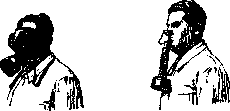
Figure 1.
Figure 2.
from passing and working people on the tracks and from other maneuvering tracks. Movement of the cyanide-treated car is prohibited. Disinfection personnel are provided with special clothing and respirators (see Figure 1 and 2). Work must be done in respirators. When hanging and sprinkling cyanide salts, disinfectors must use exclusively a spoon or tongs, and by no means do anything with bare hands. Wounds on the hands must be bandaged and covered with adhesive plaster. After any work with cyanide salts, hands are thoroughly washed. Cyanide salts are stored in hermetically sealed containers in a special, well-lockable room. The car prepared for cyanidation is cordoned off at a distance of at least 30 m by track signals indicating: 'Cyanidation. Entry prohibited. Dangerous to life'. Test tubes with control insects are placed in the car as deeply as possible. The person in charge of disinfection distributes the roles among the disinfectors and checks whether, in addition to the usual first aid supplies, there is also an oxygen cylinder, oxygen pillows, forceps for holding the tongue, an injection syringe, 20 cm3 of ether for injection, a solution of 5 g of caffeine in 20 cm3 of distilled water, and a spare gas mask. In Germany, for workers with hydrogen cyanide, mainly with cyclone B, the firm 'Degesch' (Frankfurt am Main) has issued special boxes with a set of items necessary for providing assistance in case of hydrogen cyanide poisoning. -In the prepared car, oak vessels with sand under them are placed in two locations, into which a previously measured required amount of water is poured, then the required amount of sulfuric acid is poured in a thin stream with constant stirring into the water. The required amount of cyanide salt, weighed in thick paper pierced in several places, is lowered into this mixture. For 1 m3 of car, the following is taken: water 92 cm3, sulfuric acid 32 cm3, and sodium cyanide 25 g. Before immersing the cyanide salt in the vessel, the person in charge of disinfection verifies whether the car is sufficiently protected by signals, whether people have remained in the car, whether all water has been poured out, and whether the doors have been sealed. After immersing the salt, the car is locked, the doors are sealed, and the same danger notice is posted on them. A guard is posted at the car. After 24 hours from the start of the reaction, the entrance door is opened for ventilation, and one hour after opening the door, disinfectors in respirators enter the car and remove the vessels from it, first covering them with lids, and pour their contents either into the sewer or bury them in the ground to a depth of at least 50 cm. Then all doors and windows are opened wide for ventilation. After three hours of through ventilation, the car is cleaned, after which it is ventilated again for 36 hours, and only after testing for the absence of dangerous doses of hydrogen cyanide (phenolphthalein or benzidine tests) and treating it with vacuum cleaners is the car put back into operation. Instead of this method, cyclone B (Zyklon B, see Deratization) manufactured by the German firm 'Degesch' can be used. For disinfection and disinsection of passenger cars on the railways of the USSR, disinfection stations must be available (based on order NKPS and NKZdrava No. 8562), consisting of special, well-heated, ventilated, and lit rooms equipped with water supply, waterproof floors, and drainage systems. These rooms must be provided with all necessary equipment, such as: formaldehyde steam disinfection chamber, boilers for heating water, boiling spittoons, boiling sponges, rags, etc., vacuum cleaning devices, sufficient amount of disinfection equipment, brushes, rags, separate rooms for personnel and storage of inventory, as well as a shower department. In Germany, on the Prussian railways (Potsdam, Eydtkuhnen, Frankfurt, and recently near Cologne), special chambers for disinfection and disinsection of entire cars have been equipped by the firm 'Julius Pintsch' (Julius Pintsch, A. G., Berlin). These chambers allow disinfecting a four-axle Pullman car without removing any
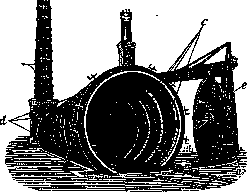
Fig. 3. Chamber of the 'Julius Pintsch' system for disinfection of cars in Potsdam: a-handle for closing the door moving on rails; c-pipes of the steam heating network leading from the upper pipeline and converging in a common condensation pipe; d-chamber ribs; e-ladder for unscrewing the upper rear cover of the lid.
of them. These chambers allow disinfecting a four-axle Pullman car without removing any
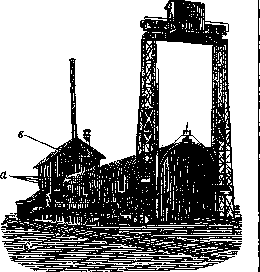
Figure 4. Hangar of the Büring system for disinfection and disinsection of cars in Belgrade: a-spray boxes; e-machine building; c-shutter.
things. In fact, it is a giant universal disinfection vacuum chamber of the type designed by Prof. Rubner (of the Saxe-Weimar type) with standing, but not flowing steam (see figure 3). The German firm 'Buhring in Weimar' (Buhring, A. G., Weimar) has also constructed an apparatus that allows for the disinfection and disinfestation not only of individual railway cars but also of entire train compositions. Such station-apparatuses now exist in Sarajevo, Belgrade, Skopje, Zagreb, Bucharest, and Iași. This installation serves for the disinfestation of railway cars with cyclone B or hydrogen cyanide, as well as for D. with formaldehyde vapors (see figure 4). D. of railway cars is carried out in special hangars. The railway cars are rolled into a pre-heated hangar. The hangar doors are hermetically sealed. With the help of an exhauster, the air in the hangar is brought to the required vacuum, and then 6 atomizers for cyclone B are installed. After 2-3 hours of disinfestation, the exhauster, which serves for ventilating the chamber, is turned on, and the hangar door is slightly opened. After 10 minutes, the doors can be completely opened, the railway cars are removed from the hangar for further processing, and the hangar is free for further work. m. Roikhel. IV. D. in military field conditions has the following features: 1) in most cases, it is part of that complex of sanitary measures which is called 'sanitary processing'; 2) for chamber D., mobile-type chambers are most widely used; 3) in the construction of disinfection chambers, local readily available materials are widely used, with various possible deviations from established types and improvisation of new systems; 4) objects of D. can be not only man, his secretions, and his belongings and dwelling, but also entire sections of land, such as the locations of troops, battlefields, and sometimes even cemeteries, dug up by the action of artillery shells; 5) the necessity of repeatedly subjecting items of clothing supply to D. forces the choice of disinfection measures that have the least effect on the strength of the items; 6) in military field conditions, recourse is taken much more frequently to the action of high temperature and to the burning of low-value items than in peacetime.-For producing wet D., simple and chlorinated lime, crude carbolic acid, and soap-carbolic solutions are most often used. Of physical agents—high temperature. 1. Burning of low-value items, refuse (with the help of destructors); in some armies, for example in the English one, feces were burned in a Horsfal furnace (in 5-7 hours the furnace burns feces from 1,000 people), in the French one—in Hyser apparatuses (for 500 kg of mass, 230 kg of firewood and 30 kg of charcoal are required), a more economical method—mixing feces with sawdust. In some armies, the burning of corpses of people and animals that fell on the battlefield was carried out—an uneconomical method (5 horse corpses require 1,200 kg of firewood and 8 hours of time). 2. The use of a hot iron (mainly for disinfecting uniforms) is widely used in military field conditions; the temperature of the iron depends on the method of its heating: on a heated iron surface—196°, on charcoal—220°, heating with an alcohol flame—300°. When ironed, lice and their embryos and most bacteria perish, however, for staphylococci and diphtheria bacilli, ironing for not less than 5-15 minutes is required.-Hot air is widely used, mainly for disinfestation purposes and only partly for D. (for non-resistant bacteria). These include the 'Helios' apparatuses, thermal chambers, Vondran's apparatus, etc. (see Disinfection chambers). In addition, in military field conditions, the simplest chambers also found wide application: lice-killing chambers, steam bath chambers, dugout chambers, etc. For the same purpose, various existing installations in factories and plants were also used, for example, chambers in rubber factories used for vulcanization, or molasses vats of a sugar factory, etc.-Boiling water and solutions of alkalis and soap are widely used in military field conditions for D. of linen in special apparatuses—boilers (see) of both stationary and mobile type.-Steam, both saturated and superheated, is also widely used in military field conditions. Apparatuses proposed and used for this purpose are very numerous; the main ones: the steam sterilizer of Turner, chambers of Kapustin, Rapchevsky, Krupin, systems of Saxe, etc.; in some foreign armies, a mobile chamber of Austrian pattern was used (on a four-wheeled carriage, total weight about 128 kg); in the German army—the 'Double Diogenes', consisting of two barrels installed crosswise on a vehicle platform (see figure 5) with a separate steam generator, or chambers of the 'Maruko' type on a
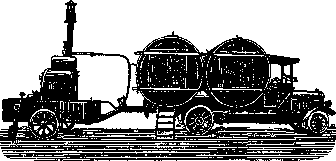
cylinder made of special
Figure 5. Mobile chamber 'Double Diogenes' two-wheeled carriage; in the French army—the Bordas apparatus, representing a system of barrels and a steam generator. A feature of French military field chambers is their simplicity and the possibility of local manufacture. In the English army, the so-called bag chamber (see figure 6) was widely used, representing a soft fabric made of specially prepared material and a small copper-1 I ' ^5?
\\
\\ with a steam generator weighing about 50 kg. For the purpose of mass D. of items, the 'Japanese' steam-formaldehyde chambers proved to be very convenient. They have the following advantages, very important in military field conditions: 1) they can be built on the spot, 2) their size is arbitrary, and therefore the throughput capacity can be ensured according to requirements, 3) the relative brevity of D. time, and 4) they do not damage items, including leather and fur ones. For chambers of Japanese type in military field conditions, freight cars, wagons, etc. can be adapted. Steam chambers of a more advanced type, such as chambers with reduced pressure of the Rubner type, are used mainly in stationary disinfection installations.-The use in military field conditions of various gaseous substances has the main purpose of destroying
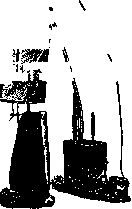
FIG. 6.
Bag chamber. Disinfection of parasites is carried out using: 1) sulfur dioxide (requires certain humidity in the chamber, may damage items), 2) hydrocyanic acid (danger of poisoning), 3) chloropicrin (currently adopted in the French army). With the appearance of chemical warfare agents (see), the concept of disinfection includes a number of measures aimed at destroying chemical agents "adsorbed" by objects both in vapor form and in liquid droplet form. These measures are called decontamination (see). Since hot moving air can often be the disinfecting agent, some disinfection chambers can be adapted for decontamination purposes. - The organization of disinfection in field conditions in the Red Army is as follows: in military units and formations and field hospitals, mobile disinfection chambers with corresponding disinfection personnel are provided by staffing tables. Supply of military units and medical institutions with disinfectants, sanitary technical equipment, and equipment of baths and laundries is carried out through the Military-Sanitary Administration of the RKKA. To serve moving contingents, sanitary disinfection trains are provided, which have disinfection chambers and laboratories, as well as bath-laundry trains with disinfection installations corresponding to the capacity of the bath. The same purpose is served by the bath disinfection installations of isolation checkpoints and disinfection railway detachments, which carry out Disinfection of railway tracks and cars. V. Disinfection for specific diseases. The choice and implementation of disinfection for various diseases depend on the biological properties of the pathogen, the routes of its excretion from the patient's body, and the nature of the epidemic chain, which all efforts should be directed to destroy. - Cholera. Immediate (current) disinfection is required throughout the disease for feces and vomit and all items contaminated by the patient's excretions. It is important to destroy flies and protect excretions and food products from them. The cholera pathogen dies immediately when heated to 100°, within 30 minutes at 58°, tolerates cold well, even frost. It is quickly killed by 1% carbolic acid and various acids: sulfuric, hydrochloric in a dilution not exceeding 1:10,000, as well as lime water. In final disinfection, main attention is paid to the patient's linen, their bed, the floor and part of the wall adjacent to the patient's bed, the toilet, and the cesspool. Disinfection of the room with formalin vapor is unnecessary: moist disinfection is sufficient. In bacillary carriers (sometimes 30-50 days) - disinfection of the toilet, toilet seat, and hands of the carrier. - Bacillary dysentery. Feces of the patient and everything contaminated by them require disinfection. Regarding flies - the same measures as for cholera. The pathogen dies at 60° in 15 minutes, from a 2% solution of carbolic acid - in a few minutes. Drying kills quickly. In final disinfection and in bacillary carriers - the same measures as for cholera. - Amoebic dysentery. Feces require disinfection. Some forms of amoebae (cysts) are very resistant. Alkalis work better. Lime milk mixed with feces is used. After 3-4 hours, it can be poured into the toilet. - Typhoid fever. Feces and urine require disinfection. The pathogen is most abundant in them during the third week of the disease. The pathogen dies when heated to 60° for an hour. Carbolic acid kills in 30 minutes. Final disinfection is the same as for cholera. - Paratyphoid. Feces and urine require disinfection. The most contagious period is the end of the second week; in meat poisonings - the first days. The pathogen is more resistant than the typhoid one: at 70° for 20 minutes it does not always die. Current and final disinfection is the same as for cholera. - Typhus. Excretions and secretions of the patient are not contagious and do not require disinfection. The mandatory measure is destruction of lice and their eggs. The patient's blood contains the infectious agent from the incubation period until 3-5 days after the temperature drops. - Relapsing fever. Excretions and secretions of the patient do not require disinfection. It is necessary to destroy lice, bedbugs, and other stinging insects. Blood contains the pathogen not only during attacks but also during remission. Infection occurs through skin abrasions when a blood-sucking insect that has fed on the patient's blood is crushed on a person's body. - Infectious jaundice (Botkin-Weil disease). Urine and feces of the patient require disinfection. It is necessary to destroy rats, which are carriers of the disease pathogen, and stinging flies. - Five-day fever. The pathogen is spread exclusively through lice. Disinfection measures are the same as for typhus. - Malaria. It is necessary to destroy Anopheles mosquitoes and protect people from their bites. - Rabies (hydrophobia). Infection occurs through bites or through abrasions on the skin. Disinfection in caring for patients is preventive: frequent washing and disinfection of hands. After the patient's death, final disinfection (wet) is required. A rabid animal must be destroyed. - Glanders. Mucus, sputum, and pus (and in intestinal form also feces) and all items contaminated by these excretions require disinfection: dishes, linen, patient's bed, floor and walls near the bed. Final disinfection is necessary: the room - with formalin vapor, all items - with disinfectant solutions. After glanders animals, straw and hay in the stall are burned. Walls and floors are poured with strong disinfectant solutions. An earthen floor is poured with lime water, then the top layer of soil is removed and deeply buried. Manure is abundantly poured with lime water. - Anthrax. Current disinfection is required for all excretions and secretions of the patient, the bed, floor and wall near the bed. Thorough final disinfection (wet) is necessary. Animal and human corpses are buried in the ground following special rules as deeply as possible. - Malta fever. All excretions of the patient and items contaminated by them, as well as the bed, part of the wall and floor near it require disinfection. Final disinfection - with formalin vapor. - Plague. All excretions of the patient (urine, sputum, pus, feces) must be disinfected immediately on the spot, as well as all items contaminated by them. During the illness, no item should be taken out of the patient's home. Final disinfection must be complete and thorough. All low-value items should be burned. Thorough disinsection and deratization. - Diphtheria. Mucus and sputum from the patient's nasopharynx and all objects that may be contaminated by them require disinfection; linen, dishes, patient's bed, floor and nearest walls, hands of caring personnel. Final disinfection - after the disappearance of the pathogen from the patient's throat, but not earlier than 14 days after the disappearance of throat coatings, both wet and with formalin vapor. - Scarlet fever. Due to lack of accurate information about the pathogen, all excretions of the patient and items contaminated by them must be immediately disinfected, as well as the patient's linen, dishes, bed, the nearest wall and floor. Final disinfection (not earlier than the 6th week after the onset of the disease) - thorough wet disinfection for all items in the patient's room and additionally with formalin vapor. - Measles. Mucus and the patient's linen require disinfection. Final disinfection is not applied. - Smallpox. The pathogen is unknown, it quickly dies outside the human body. Disinfection is not applied. - Epidemic childhood paralysis (poliomyelitis). All excretions of the patient and all items contaminated by them require current disinfection; it is necessary to destroy flies and bedbugs. Final disinfection is desirable both wet and with formalin vapor. - Rubella. Disinfection is not applied. - Whooping cough. Mucus, nasal mucus, and the patient's linen require current disinfection. - Smallpox. All excretions of the patient require thorough current disinfection: mucus, sputum, vomit, urine, feces, and all items contaminated by them. Destruction of flies. Final disinfection is necessary not only in the patient's room but also in adjacent rooms. - Erysipelas. Linen, bandages require disinfection. Final wet disinfection is recommended. - Influenza. Mucus, dishes, and the patient's linen require disinfection, especially handkerchiefs. Final disinfection is not applied. - Tuberculosis. The pathogen is very resistant, tolerates drying, maintaining its virulence for years; it is killed by boiling in 5 minutes. In sputum and mucus it is killed with difficulty. Sublimate, lime water, bleaching powder are unsuitable for disinfection. Alkaline solutions of phenols and cresols work better (3-4 hours). The most rational method is disinfection with steam under pressure (in an autoclave) or incineration. Sputum, nasal mucus, feces, pus (in kidney tuberculosis - urine) and all items contaminated by these excretions (especially spittoons) require disinfection. When disinfecting items and the patient's room, extensive use of sunlight is recommended. - Leprosy. The pathogen is very resistant, similar to the tuberculosis bacillus in relation to disinfectants. All excretions and linen of the patient require disinfection. Patients should be isolated in leprosaria, after being sent to which thorough final disinfection (wet and formalin-steam) of all items and the patient's room, as well as the toilet, is recommended. - Syphilis. The pathogen quickly dies when dried, heated, and from ordinary disinfectant solutions.
All discharges and items soiled by them, the patient's dishes, and the toilet seat require disinfection.
A.
Savelyev.
VI. Disinfection of raw animal products in the vast majority of cases concerns materials infected with anthrax spores, much less frequently it is a matter of materials infected with any other pathogenic microorganisms. The application of one method or another for disinfection requires special attention and caution in view of the fact that the task of this disinfection also includes the protection of the health of workers in the processing industry. Within the country, disinfection of raw animal products is nothing more than a palliative, which is inevitable until it becomes possible to destroy the sources of infection of animal raw materials through veterinary-sanitary measures. As for imported raw materials, they require constant border control and rational disinfection. Disinfection of materials infected with anthrax spores presents considerable difficulties, since these spores are, firstly, distinguished by special stability, and secondly, are located not only on the surface but also in the less accessible depth of the objects to be disinfected. Disinfection of animal raw materials suspected of being infected with non-spore-forming microbes, for example, rodent skins from plague-affected areas, does not cause particular difficulties, as it is performed very simply, in some cases even proper drying is sufficient. Therefore, the main problems of disinfection of raw animal products come down to disinfection in connection with anthrax infection. According to the proposal of the IX All-Russian Congress of Bacteriologists, Epidemiologists and Sanitary Physicians in 1925, it is advisable to divide raw animal products into three groups with special disinfection methods: 1) hair, bristles, and wool, 2) hides and skins in dry, fresh, and salted states, 3) horns, hooves, and bones. 1. Hair, bristles, and wool, contaminated with anthrax spores, cannot be reliably disinfected in large dense packs, bales, and other commercial packaging and therefore must be separated or loosened before disinfection under appropriate sanitary supervision. Of the large number of disinfection methods proposed, most proved unsuitable in practice, either as failing to achieve the goal in mass processing of raw materials or as adversely affecting the quality of the product. At present, only the following methods are considered satisfactory. a) Disinfection with flowing saturated steam under a pressure of up to 2 atmospheres at a temperature of 114-115° for 2-3 hours, counting from the moment the temperature of 100° is established inside the disinfection apparatus. For horse hair, it is recommended not to exceed a temperature of 107°. b) Boiling of hair and bristles for two hours in water or 15-45 minutes in a 2% solution of potassium permanganate with subsequent bleaching in a 3-4% solution of sulfurous acid. c) Disinfection of delicate varieties of bristles and wool in small packages by the Rubner method in steam-formaldehyde vacuum apparatuses (see Disinfection chambers). d) Treatment of wool by the Liverpool method, by which it is subjected to sequential mechanical washing in hot soap-alkaline solutions, soaking in a 2-3% solution of formaldehyde at 40° for 24 hours, and then immediate drying at 90°. The latter method requires special complex equipment and specially trained personnel. 2. Hides and skins. The question of disinfecting hides and skins infected with anthrax spores cannot yet be considered satisfactorily resolved. Here, too, as in the disinfection of hair, bristles, and wool, the results achieved in laboratories were not justified when applied on an industrial scale. The matter is further complicated by the fact that different varieties of hides and skins react differently to various chemical and physical agents. It should be mentioned that as early as 1906, a commission of the military department worked on the question of disinfecting anthrax-suspect sheepskins intended for making fur coats, but it did not bring its experiments to a satisfactory result. In view of the harmful effect on hides and skins of high sporicidal temperatures, the attention of all researchers was turned to chemical agents capable of killing anthrax spores. Brekle proposed an original method of sprouting spores in the raw material by immersing it in water for two days at a temperature of 43-44° (excluding the possibility of new spore formation), and then killing the vegetative forms by the action of lime milk for one day, which is harmless to the raw material. This correct idea is technically almost impossible to implement on an industrial scale. Of chemical substances for disinfection of hides and skins, formaldehyde in various forms of application, sublimate, and hydrofluoric acid have been proposed. None of these means has found practical application in the leather industry. At present, two methods are used, for the development of which technical methods used by the industry in the process of processing hides have been utilized. 1) The method proposed in 1911 by Schattenfroh, the so-called "pickling," or the Vienna method, borrowed from French manufacturers who use HCl and NaCl for preserving hides. According to the experiments of Schattenfroh himself, as well as Gegenbauer and Reichel, HCl indeed kills anthrax spores in the very thickness of the hides; the addition of NaCl is necessary (according to Kohnstein) to prevent excessive swelling of the hides. The disinfecting effect and harmlessness of this method for the raw material depend on the concentration of the solution, its temperature, and the duration of its action. In its final form (according to the proposal of Mogle and Hailer), the method consists in immersing the raw material for 6-10 hours in an aqueous solution of 2% HCl + 10% NaCl, maintained at 40°, with the amount of solution being at least 10 times the weight of the immersed raw material. Deviations from this formula, in the sense of reducing the percentage content of HCl and temperature, are allowed by some authors for more delicate varieties of hides. According to European experience, mainly German and Austrian, "pickling" gives quite satisfactory results, reliably killing anthrax spores and causing no spoilage of the raw material (however, only with correct and skillful application). The few attempts to use this method in the USSR have so far given contradictory results, which highlights the need for further testing of it under our local conditions under strict scientific and technical control. 2) The second method, the so-called "alkaline method," is borrowed from the practice of tanneries, where NaOH is sometimes used in solutions up to 1% without harm to the quality of hides or skins. For disinfection purposes (according to Leymann's instructions), a solution containing 0.5% caustic alkali and not less than 1% NaCl is used, with a temperature, preferably, of 20° and not less than 15°. Ox and horse hides are kept in this solution for 96 hours, sheep, calf, and goat hides for 72 hours. As with "pickling," the ratio of 10 liters of solution per 1 kg of raw material is observed. Where technically possible, this alkaline treatment method is included in the tanning process as part of it. In any case, after alkalization, hides and skins must immediately go for further processing. According to Gottstein, who critically analyzed the methods of disinfection of raw animal products, both described methods of disinfection of hides and skins are satisfactory, but in some cases it is more expedient to use "pickling," and in others the "alkaline method." The choice between them should be left to technical specialists. 3. Horns, hooves, and bones from animals suspected of anthrax do not undergo disinfection (with the aim of then using them for the manufacture of any items), but must be either destroyed by burning or rendered harmless by fundamental processing into other products by means of procedures in which anthrax spores inevitably perish. Bones may be allowed for processing exclusively into animal charcoal, but by no means into bone meal. Disinfection of raw animal products must be carried out in special institutions. Disinfection institutions should be located at border checkpoints for import and export raw materials and within the country—at major transshipment points for raw materials, at places of collection of raw materials in anthrax-affected areas, as well as in centers of the processing industry. To determine the infection of raw materials with anthrax, in addition to the usual bacteriological methods, the precipitin reaction according to Ascoli is used with great success in mass examinations.
A. Vladimirov. Disinfection of wastewater, see Wastewater.
Related articles
Mentioned in
Cite this page
“Disinfection.” Soviet Medical Encyclopedia. English translation of Bolshaya Meditsinskaya Entsiklopediya, 1st ed. (Moscow, 1928–1936), ed. N. A. Semashko. https://sovietmedicalencyclopedia.pages.dev/article/disinfection/