Filatov
Historical document, translated for reference. It reflects medical knowledge of the 1920s–30s and is not medical advice.
Summary
Nikolai Filatov (1846-1902) was a professor at Moscow University and one of the founders of Russian pediatrics. He made significant contributions to pediatric medicine, particularly in infectious diseases and clinical diagnosis, and his works were widely translated internationally.
Encyclopedia article (1928–1936)
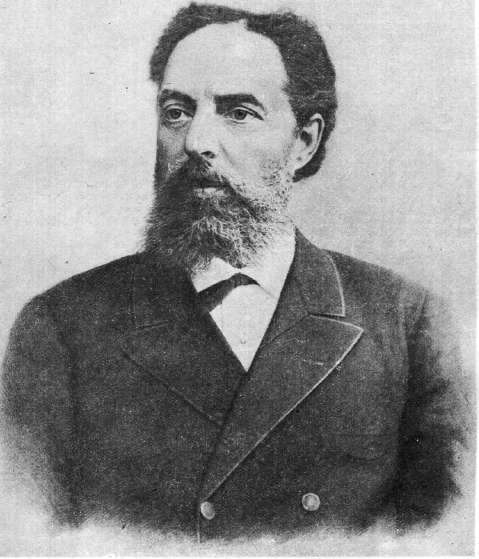
FILATOV Nikolai Fedorovich (1846-1902), professor at Moscow University, one of the founders of Russian pediatrics. He graduated from Moscow University in 1869, was an intern at the children's hospital on Bronnaya, which was later moved to Sadovaya and renamed the Sofia Hospital, and now bears his name. After spending over two years abroad to further his education under the best representatives of contemporary medicine, he defended his dissertation in 1876 on 'The Relationship of Capillary Bronchitis to Pneumonia,' was elected privat-docent at the university, and gave lectures at the aforementioned hospital. In 1891, he received the chair of children's diseases at Moscow University, which he held until his death. He authored works that formed the foundation of Russian clinical pediatrics: 'Semiotics and Diagnosis of Childhood Diseases,' 'Infectious Diseases in Children,' 'Brief Textbook of Childhood Diseases,' 'Lectures on Acute Infectious Diseases,' 'Clinical Lectures,' and many other smaller in volume but significant in importance works on which many generations of pediatricians have been and continue to be educated. From this point of view, F. can rightly be called the founder of Russian pediatrics, immediately bringing it to the level of Western pediatrics. The aforementioned classical works of his have been translated into German, French, Italian, Hungarian, Czech, Polish, and even Japanese, and have earned enthusiastic reviews in the foreign press. 'Few books that an author could have compiled based on his own subtle and thoughtful observations,' writes Professor Bozzolo in the preface to the Italian translation of F.'s 'Semiotics and Diagnosis.' Indeed, this work is the result of F.'s powers of observation and creative work, a compilation of his daily observations at the bedside of patients, which were systematized, arranged, constantly supplemented and verified by him. The original arrangement of material, the vividness of descriptions that often give greater clarity than the best illustrations, and the subtle analysis of facts make this book to this day an unsurpassed guide not only for pediatricians. From descriptions of individual cases, from comparison of the diverse manifestations of diseases, from the mass of masked, confused pictures of diseases, F. crystallizes individual independent forms, with special care differentiating them from similar ones. Thus, as early as 1877, he wrote about the independence of chickenpox, in 1885 he identified scarlatiniform rubella, the so-called 4th disease, later described by the Englishman Dukes, in 1887 he spoke about the pathogenesis of analbuminuric edemas in children, of protracted afebrile forms of influenza, of pityriasis peeling of the oral mucosa in children in the prodromal period of measles—a sign described by Koplik a year after F.—of idiopathic inflammation of the lymph glands of the neck, which later Pfeiffer described under the name glandular fever, etc. Another major work of F.—'Lectures on Infectious Diseases in Children'—for many years until recently was the only major systematically presented guide where, with full use of the subject's literature, the author's enormous personal experience and powers of observation are constantly felt. It should be noted that in his last years F. showed special interest in nervous diseases of childhood, and before the clinical audience he presented a series of clinical forms: acute ataxia, paraplegia, chorea, the boulevard symptom complex, pseudohypertrophy muscul., Little's disease, Strümpell's disease, and many other nervous diseases of childhood, which students could not see elsewhere, since children did not come to the nervous diseases clinic, and even the major neuropathologists themselves were often little acquainted with them. F. was not a brilliant lecturer, but the clarity, simplicity of presentation, brevity and at the same time vividness of his speech, and most importantly his analysis of patients, his ability to select the most essential facts from the mass noted, to synthesize these facts and give an accurate diagnosis—all this always attracted a full audience of listeners not only of students but also of physicians of other specialties. F.'s lectures remained entirely in the memory of his listeners. The two printed volumes of his clinical lectures give an idea, though of course incomplete, of his method of presentation, and the simplicity and clarity of his analysis of patients. Among the brilliant constellation of professors of Moscow University of the 1890s, F. occupies one of the first places. While still a docent, he took the most active part in the then organized circle of pediatricians, and with his active participation this circle turned into the Moscow Society of Pediatricians, where he was chairman for 10 years until his death; thanks to his efforts the society was able to publish its works and protocols. There is no need to speak of the fact that F. enjoyed enormous popularity as a practicing physician not only in our country but also abroad. If one compares what Russian pediatrics was before F. and after him, it becomes clear what a major figure he was for us and for pediatrics in general. He died in the prime of his activity, leaving a legacy of about 70 scientific works and the unforgettable name of the founder of Russian pediatrics. F. authored classical guides that were many times reprinted posthumously and translated into foreign languages: 'Lectures on Acute Infectious Diseases in Children' (5th ed., Moscow, 1903); 'Brief Textbook of Childhood Diseases' (11th ed., Berlin, 1922); 'Semiotics and Diagnosis of Childhood Diseases' (9th ed., Moscow-Petrograd, 1923).
1927-28); 'Experimental Zoology' (Leningrad, 1932); 'The Evolutionary Idea in Biology' (Moscow, 1923, 2nd ed., Moscow, 1926); 'Popular Biology' (2nd ed., Leningrad, 1925); 'Variability and Variation' (Berlin, 1927).
Related articles
Mentioned in
Cite this page
“Filatov.” Soviet Medical Encyclopedia. English translation of Bolshaya Meditsinskaya Entsiklopediya, 1st ed. (Moscow, 1928–1936), ed. N. A. Semashko. https://sovietmedicalencyclopedia.pages.dev/article/filatov/