Galvanization
Historical document, translated for reference. It reflects medical knowledge of the 1920s–30s and is not medical advice.
Summary
Galvanization, the application of constant electric current, is a common method for using low-voltage currents in medical practice. This article details the proper equipment, electrodes, and safety precautions for administering galvanic therapy.
Encyclopedia article (1928–1936)
Galvanization, i.e., electrification by constant current, is the most common method of applying low-voltage currents. In electrical engineering, any current that does not change its direction is called constant current, but for medical application in some cases, it is important that the current not only maintains its direction but is also free from the slightest voltage fluctuations. The oscillographic image of such a constant current should represent a perfect straight line. This is achieved only with current from galvanic cells and accumulators. Of the galvanic cells, the Daniell and Leclanché cells are fully suitable for medical purposes; the latter must necessarily be provided with caps—a small but extremely important condition. Accumulators of type J I, with 36 ampere-hours capacity should be used. A battery of 40-45 elements is quite sufficient. If it is impossible to install a battery, a converter ('rotary converter') of about 1 kilowatt power should be installed, with the dynamo not giving a current above 100-110 volts. The current is used through a distribution device (in the form of a board, table, or desktop lectern—see Figure 1 and 2). The device should be simple and consist of the following parts: milliampere meter, rheostat, voltage regulator, commutator, switch, and 1-2 signal lamps. If it is necessary to use constant current from a central station of higher voltage (most often 220 volts), this voltage must be reduced to 80-90 volts to avoid mortal danger in case of accidental grounding of the patient. Usually for this purpose a lamp is included in one of the wires; however, such inclusion is absolutely insufficient, and for complete safety, lamps should be included in both wires. But since a lamp may burn out and thus cause a break in the current, it is much more reliable, although significantly more expensive, to arrange devices with wire resistances (rheostats). -- Electrodes used for electrification consist of a metal plate and a pad. The plates must be made of flexible metal—best of sheet tin or lead, 1 mm and 0.5 mm thick, and for pads, smooth, unpainted cotton cloth or paper baize is most suitable; the more nap, the better; in this case, one should by no means limit oneself to fewer than 14-16 layers to obtain a pad 1-2 cm thick. If the pad is made of separate pieces, they should be sewn only on three sides and one should not quilt them. For connecting the electrode plate, use one or the other of the textile pads.
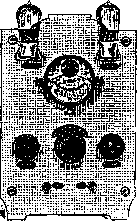
Figure 1. Distribution board of the model of the State Institute of Physiotherapy and Orthopedics in Moscow.
current from a central station of higher voltage (most often 220 volts), it is necessary to reduce this voltage to 80-90 volts to avoid mortal danger in case of accidental grounding of the patient. Usually for this purpose a lamp is included in one of the wires; however, such inclusion is absolutely insufficient, and for complete safety, lamps should be included in both wires. But since a lamp may burn out and thus cause a break in the current, it is much more reliable, although significantly more expensive, to arrange devices with wire resistances (rheostats). -- Electrodes used for electrification consist of a metal plate and a pad. The plates must be made of flexible metal—best of sheet tin or lead, 1 mm and 0.5 mm thick, and for pads, smooth, unpainted cotton cloth or paper baize is most suitable; the more nap, the better; in this case, one should by no means limit oneself to fewer than 14-16 layers to obtain a pad 1-2 cm thick. If the pad is made of separate pieces, they should be sewn only on three sides and one should not quilt them. For connecting the electrode plate, use one or the other of the textile pads.
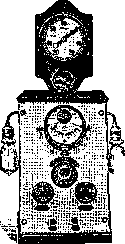
Figure 2. Distribution lectern of the model of the State Institute of Physiotherapy and Orthopedics in Moscow.
to the wire, another clamp can be attached. The physiological action of direct current consists of irritating sensory (and under certain conditions also motor) elements (hence the reflex effect on the central nervous system), dilation of blood vessels, excitation of tissue electric currents, and enhancement of cellular metabolism. Physico-chemically, this is exclusively due to the movement of tissue ions. There is no electrolysis in the interelectrode space ('electrostenolysis,' i.e., electrolysis without electrodes); when ions collide with cellular partitions, they do not lose their charges and act, remaining as ions, or reunite into elements. The movement of ions changes their ratio in cells, i.e., it disrupts Lebedev's ionic coefficient; faster-moving monovalent ions K' and Na' outpace divalent ions Ca'' and Mg'' and accumulate at surfaces facing the negative pole of semipermeable partitions; here excitation occurs simultaneously with increased permeability of membranes, while at surfaces facing the positive pole, where the lagging ions Ca'' and Mg'' predominate, inhibition and decreased permeability occur; simultaneously both surfaces of the partition become oppositely charged and form capacitors. Due to the movement of H' and OH' ions in different directions, in some parts of cells there is an increase in H-ion concentration and oxidation of the medium, in others a decrease in this concentration and alkalization of the medium. The change in medium reaction creates favorable conditions for the work of enzymes and enzymes present in cells and thus enlivens cellular 'digestive' processes. On the other hand, the change in ion concentration also affects the phenomena of ion adsorption by micelles of colloidal substances: previously adsorbed ions are displaced by others, which changes the stability of colloidal solutions; under certain conditions, for example, proteins coagulate, and the activated pepsase and pepsinase, due to medium oxidation, break down these coagulated proteins, converting them into amino acids, for which cellular membranes are permeable, and proteins are removed from the cell (protein metabolism increases); similarly, lipase breaks down fats and increases fat metabolism, etc. Increased permeability of cellular membranes facilitates osmotic processes, which changes the surface tension in cells, etc. The heat generated, undoubtedly present here, is so insignificant that it cannot have physiological significance. The excitation of nerve elements caused by ion movement manifests as the specific action characteristic of these elements, i.e., sensory cells respond with the occurrence of painful sensations, motor cells with contraction of the corresponding muscle, etc. The intensity of the painful sensation is influenced not only by the strength of the current, but even more so by its density (i.e., the ratio of current strength to electrode area) and uniformity: current from elements is much more tolerable than current from pantostats, rectifying installations, or converters. Motor reaction occurs only during periods of changing state, i.e., at the moments of closing and breaking a current of certain strength. With slow increase or decrease of the current, as well as during its passage, no contractions are observed. The negative pole excites more strongly than the positive one, and the first contraction occurs when the nerve or muscle is irritated by the negative pole, and at the moment of current closure; generally, contractions follow in this order: KZS > AZS > ARS > KRS (Pflüger's formula). To obtain a contraction, the current must not only change with a certain speed and have a certain strength, but it must pass for a certain period of time (within ten-thousandths of a second). The difference in the action of poles is manifested only in the immediate vicinity of the electrodes, not in the interelectrode space, where, due to the presence of an infinite number of semipermeable partitions, 'virtual' poles are created in each cell; thus, the widespread opinion that the therapeutic value of negative and positive poles is different and that in treating paralysis the poles must be placed differently than in treating neuralgia is incorrect. The resistance of the body to electric current depends on many conditions and, mainly, on the area of the electrodes and the degree of their wetting, as well as on the composition and temperature of the wetting electrode fluid. Under ordinary conditions, the resistance of the body (more precisely, the skin) during galvanization varies from several hundred to 1-2 thousand ohms. Since the human body is a heterogeneous conductor, the current is distributed in it not uniformly throughout the body, but in accordance with the resistances of the corresponding tissues, and therefore the main amount of electricity will go along paths with the least resistance, i.e., primarily along the shortest paths between the two electrodes. Thus, the action of electrification is concentrated on the straight line between the electrodes, and the physiological processes caused by it are most sharply manifested. Hence the rule: place the electrodes so that the diseased organ, if possible, is located between the electrodes. The farther the electrodes are from each other and the larger their surface, the deeper the field of greatest density extends. The penetration of current into the brain and spinal cord, with appropriate electrode placement, has been proven and is beyond doubt. The density of the current generally has great importance, and attention must be paid to it no less than to the strength of the current4 The denser the current directly under the electrodes, the more painful it is and, consequently, the smaller current strength can be applied. Since the physiological action is proportional to the amount of electricity that has passed through the body during the entire application, most modern authors strive to use the strongest possible currents for as long as possible. With the exception of strictly defined cases (e.g., galvanization of the head and sensory organs), the shortest limit for each application should be considered 20 minutes, and it is better to reach 30-40 minutes. Many authors often go up to 60 and even 75 minutes. The strength of the current is limited by the patient's tolerance, i.e., the degree of pain and reaction. Moderate exacerbation of pain for several hours is a frequent and natural reaction at the beginning of treatment, but with strong and continuous exacerbation of pain, applications should be reduced and the current strength decreased. With well-designed electrodes, good current, and density of 0.2-0.3 mA per one sq. cm, it is often possible to reach 60-80-100 and even more mA, and a strength of 30-40 mA is usual. When striving to decrease density, in most cases it is advisable to take both electrodes of the same size, and only in cases where it is necessary to concentrate the densest current on a strictly defined and limited area, one of the electrodes is taken correspondingly small. The more uniform the current, the greater strength can be applied.- Galvanization is indicated for all diseases of the peripheral neuron (i.e., for diseases of nerve trunks, roots, and cells of the anterior horns of the spinal cord), for some forms of neurasthenia and hysteria, for Basedow's disease, for diseases of the muscular system and joints, for spastic constipation, etc. For organic diseases of the central nervous system, galvanization is completely useless, although it is often prescribed by many. Interrupted galvanization, an interrupted current of usually small strength, is systematically closed and opened, and is used in cases where muscle contractions are needed and where the faradic current is not applicable (i.e., in cases of diminished faradic excitability) or where faradization is inadvisable due to the danger of contracture development (e.g., in facial nerve paralysis). Ordinary interrupted galvanization should be preferred to rhythmic galvanization, in which interruptions are made not by a manual interrupter but by an automatic one (for example, a metronome-interrupter) and therefore occur with a strictly defined rhythm.
Related articles
Mentioned in
Cite this page
“Galvanization.” Soviet Medical Encyclopedia. English translation of Bolshaya Meditsinskaya Entsiklopediya, 1st ed. (Moscow, 1928–1936), ed. N. A. Semashko. https://sovietmedicalencyclopedia.pages.dev/article/galvanization/