Gas Shelters
Historical document, translated for reference. It reflects medical knowledge of the 1920s–30s and is not medical advice.
Summary
This article describes the historical Soviet approach to constructing shelters against chemical warfare agents during the 1930s. It details the technical requirements for structural reinforcement against aerial bombs and the methods for achieving chemical-proof sealing and ventilation.
Encyclopedia article (1928–1936)
GAS SHELTERS, a term that has fallen out of use in the Workers' and Peasants' Red Army and which defined what is currently called a s h e l t e r, equipped for anti-chemical purposes and representing one of the means of passive defense for soldiers and the population against chemical warfare agents (see Combat Poisonous Substances). Shelters that are equipped for anti-chemical purposes when necessary include defensive structures on the front and in the rear, intended for protection against the high-explosive and mechanical action of shells, aerial bombs, fragments of both, bullets, and metal arrows dropped from airplanes (trenches, slit trenches, light shelters, heavy shelters, permanent concrete structures, residential buildings adapted with reinforced ceilings, and individual rooms within them, etc.). In addition to such shelters, which are provided with defensive adaptations against the action of mechanical weapons, structures that are not even protected against the action of bullets are sometimes equipped for anti-chemical purposes, which for technical and economic reasons cannot be provided with reinforced ceilings (e.g., tents, train cars, etc.). An example of calculations for ceilings for the purpose of protection against the action of aerial bombs and shells can be found in the data of the following table: Types and thickness of ceilings for shelters against aerial bombs (1,900 kg and 82 kg) and s h e l l s (3-inch and 6-inch). Ceiling 1,900 kg 82 kg 6-inch 18 m 1.5 m 6 m 0.5 m 15 m 1 m 0.35 m - 1.75 m 4 m 1 m - 3-inch 6 m 1.2 m Earth ....... Concrete on sand . . Reinforced concrete mattress...... 2 rows of logs with a layer of sand . . 4 rows of logs with a layer of sand. . Large hard stone ..... Note. When installing ceilings on basements, the ceiling of the latter must be reinforced with beams on posts, calculated according to general construction rules. An example of the construction of ceilings for basement rooms adapted as shelters for the purpose of protection against aerial bombs weighing up to 100 kg is shown in Fig. 1, which shows three variants of ceilings, equivalent in their resistance: a log flooring on the floor of the first floor, a tamped layer of sand 0.90 m thick above it, on which a concrete (0.60 m), log (1.45 m), or stone (1.25 m) mattress is laid; it is desirable to pour a layer of earth about 1.0 m thick on top of the mattress; in order to create support for the specified ceiling, which has a large weight, posts are installed inside the basement at a distance of 1.5 m from each other, resting on sleepers connected by transverse 184 pads, while the floor is reinforced with a plank flooring of 5-6 cm; the walls are reinforced from the outside by means of an embankment of tamped earth, located at least 3.6 m from the wall at the bottom (see Figure 1). For the anti-chemical equipment of shelters, which has the goal of 2nd floor
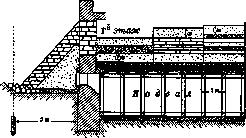
Figure 1. Typical shelter ceilings for protection against aerial bombs weighing up to 100 kg.
a) to protect the guarded room from the penetration of poisonous substances into it and b) to provide the people and animals located there with air of proper quality and quantity for the necessary time, the following technical means and methods ("elements of anti-chemical equipment") are used: 1) sealing of the shelter shell, consisting of special measures that create complete impermeability for poisonous substances (and for air) of the walls, ceiling, and floor; in residential buildings, windows, flues, cracks, etc., are sealed; 2) the installation of vestibules (see Figures 3 and 4), impermeable doors, or curtains to protect entrances from the penetration of poisonous substances; the curtain (see Figure 2) is made of tarpaulin or dense tent fabric, treated with a mixture of 85% steam-refined cylinder oil and 15% boiled linseed oil (300% weight gain), or
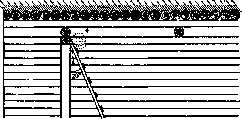
Figure 2. Curtain for protection against the penetration of chemical warfare agents made of overcoat cloth, impregnated with paraffin with 10% lanolin (100% weight gain), and has 4-6 wooden slats across and outside, nailed with nails, under the heads of which leather is placed; for storing the curtain in a rolled-up state, a trough made of three boards or a shelf is fastened at the top. The curtain must overlap the edges of the frame, which is inclined at 20°, with its edges, and in the unfolded state, its lower edge must lie on the ground for 0.1 m (Fig. 2); 3) the creation of conditions that provide or maintain a sufficient amount of air in the shelter by means of filters for cleaning ventilation air from poisonous substances, the corresponding cubic capacity of the room, and methods of regenerating air spoiled by the presence of people. Depending on the method of air supply, there are two types of shelters: a) Hermetic (see Figure 3)—without air supply from the outside, using only the reserve of air contained in the shelter, in an amount determined by the cubic capacity of the room; hermetic shelters have one or two vestibules, which are closed by curtains. Minor currents of air with poisonous substances, penetrating due to the difference between the external and internal temperature from the entrance into the shelter, while successively mixing with the air of the successively located vestibules, bring only traces of poisonous substances into the shelter itself (see Figure 3). A large excess of CO2, formed due to the presence of people in a hermetic shelter, can be absorbed by soda lime or caustic alkali, and the lack of oxygen can be compensated for by using, for example, appropriate reactions with oxylith. b) V e n t i l a t i o n shelters (see Figure 4)
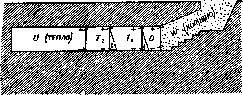
Figure 3. Diagram of a hermetic shelter: U—shelter; T1, T2—vestibules; D—doors; Z, Z—impermeable curtains.
with a variable volume of air supplied by a fan, and with simultaneous cleaning of the air from poisonous substances by means of a filter. Due to the use of a fan with a filter that forces air, in this type of shelter 1) there is a constant replacement of air in the shelter with fresh air, 2) an overpressure is created inside the shelter (0.2-6.4 mm of water column). In turn, thanks to this 1) part of the air continuously exits to the outside through leaks in the walls, ceilings, and exit, thus creating a current of air that flushes all compartments of the shelter and preventing the reverse movement of air with poisonous substances into the shelter; 2) it is possible to accommodate a larger number of people in a ventilation shelter (in relation to the volume of the room) than in a hermetic one; 3) the conditions for breathing for people in a ventilation shelter are better in sanitary terms; 4) the airtightness of walls, ceilings, etc., may not be as strictly maintained as in the first type of shelter, due to the presence of internal pressure; 5) it is possible to enter and exit a ventilation shelter during a chemical attack without introducing outside poisoned air. The negative aspects of this type of shelter include some complexity and relative expense of ventilation and filtering installations, which, however, is covered by the advantage described above, often even in economic terms, except in cases of construction
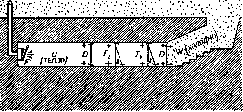
Figure 4. Diagram of a ventilation shelter: T1, T2—vestibules; DD—doors; Z1, Z2—impermeable curtains; F—filter; U—shelter.
of the simplest shelters (trenches and slit trenches) and when equipping shelters that already have finished shells (residential and other premises). Thus, for a hermetic shelter for 1 person, at least 8.4 cubic meters are needed for a 4-hour stay in it, while for a ventilation shelter—only from 2 to 4 cubic meters (with a single air exchange per hour) with an almost unlimited time of stay, as a result of which the most significant expense caused by ceilings and walls falls, all other things being equal, on the hermetic shelter. The ventilation device in a shelter consists of a filter-absorber, a fan or pump, and a pipe supplying outside air to the filter-absorber (not in all installations). As an absorber of gases, mists, and smokes of poisonous substances in filters, vegetable soil, simple and activated charcoal, felt, sawdust, and other materials can be used.
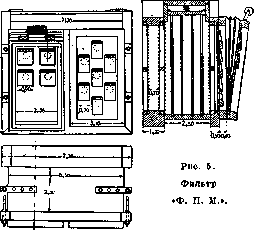
The filter is arranged outside the shelter or inserted into the wall of the latter. As an example, two filters can be cited: a) a stationary filter, consisting (see Figure 7) of vegetable soil with the highest possible humus content, placed on a decking of thin poles covered with branches and straw; on top of the filter is poured
fine charcoal, separated from the filter lying below by a layer of straw; b) the portable filter "F. P. M." (see Figure 5) consists of a box filled with an absorber and filtering material, and 2 bellows, which serve to pull air through it. The filter is placed on the wall of the shelter, being pulled by special tensioners to a wooden block, which is hermetically fastened to the wall. The opening of the pipe, which serves to supply outside air to the filter, opens into the cavity of the block. The small type of filter cleans 60 cubic meters of air per hour, and the large one—120. The filter (small) is operated by one person, pumping both bellows—one forward, the other backward—to ensure the uniformity of pulling air through the absorber (see Figure 5). To pull air through the filter, the following can be used: 1) manual fans, for example, Plo or Schiele, 2) electric,
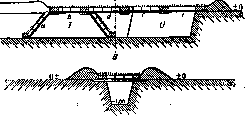
Figure 6. Slit trench equipped for anti-chemical purposes.
in relation to (engineer Timonov's project): a, b, c, d, e-canvas sections of field tents. 3) Those operated by drive, e.g., from a cavalry bugle, 4) diaphragm pumps or blacksmith bellows type ('F. P. M.') and others.-As anti-chemical equipment for shelters, devices for decontaminating poisonous substances brought into the shelter by people on their clothing and footwear are also used (see Decontamination). The main general medical-sanitary requirements for shelters equipped in an anti-chemical manner are: 1. Ensuring sanitary supervision of the construction and use of the shelter. 2. The necessity of observing at least a minimum of hygienic norms for temperature, humidity, chemical composition and quantity of air in the shelter. Such approximate, temporary data concerning sanitary air norms can include the following: Properties and volume of air Temperature in °C. Humidity (relative)...... Content of CO2 in the air Volume per person per hour Shelter for covering live forces Not higher than 28° Not higher than Not lower than Not higher than 1% Not less than 2.1 cubic m Special shelters for medical points, headquarters, etc. Not higher than 23° 80% 20% Not higher than 0.5% From 3 to 6 cubic m In this case, the determination and verification of the quality and quantity of air is carried out by the usual hygienic method, taking into account the data of the doctrine 188' on effective temperature. 3. Strict implementation of compliance between the number of people placed in the shelter and the required norms. 4. Elimination of factors that pollute the air and cause excessive consumption of oxygen contained in shelters,
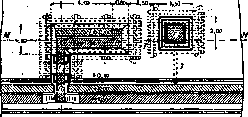
Figure 7. Light ventilation shelter with
filter from vegetable soil: a-entrance; L-vestibule; 17-shelter; B-ventilator; T-pipes conducting air; F-filter. especially hermetic ones (e.g., excessive movement of people, smoking, lighting an excessive number of candles and lamps, bringing in foul-smelling objects, especially clothing and footwear that have been under the action of C. W. and not subjected to preliminary decontamination). 5. Ensuring water for drinking and for washing the body, decontamination. 6. Taking measures that make it possible to remove waste products (urine, feces) without contaminating the shelter. 7. Ensuring first aid or self-aid in case of illness or poisoning by poisonous substances of persons in the shelter.
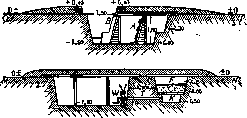
Figure 7a. Light field shelter with filter from vegetable soil for 8-10 people: A-curtain lowered; B-curtain on shelf raised; C-filtering layer; F-chamber for incoming C. W.; K-chamber of air purified from C. W.; T-pipeline to shelter; W-ventilator.
Types of shelters equipped in an anti-chemical manner, a) Trench and dugout-equipped according to the type of thermal shelter (see figure 6; 2 cubic m of air per linear meter of trench for 2 people, calculated for two-hour stay) by covering with canvas sections impregnated with a mixture of gun grease (85%) and linseed oil (15%), with the adaptation of two curtains at the entrance (Timonov). b) Light field shelter with filter from vegetable soil (see figures 7 and 7a) intended for 8-10 people (sitting); Plo or Schile ventilators. c) Heavy shelter with portable filter (see figure 8)-of the dugout type with
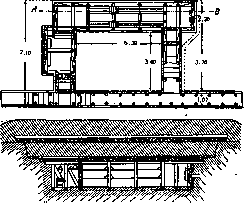
Figure 8. Ventilation shelter of the dugout type.
covering; 12 lying places or 6 lying places, 18 sitting places and 1 filter of the 'F. P. M.' type. In the first vestibule, protective clothing is removed and decontaminated; in the second- gas masks are removed, and if necessary, sanitary processing is carried out, d) Anti-chemical equipment of a peasant house consists of hermetizing windows (by plastering them), cracks, stove pipes and other openings, from the anteroom vestibules with impermeable curtains and tight doors are arranged; filter-portable type, e) Anti-chemical equipment of a tent consists of hermetization by special impregnation of canvas sections, in tight fitting
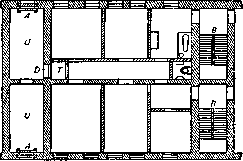
Figure 9. Anti-chemical equipment of a shelter in an apartment: A, A-plastered windows; B,B-staircase entrance; T-vestibule; D-hermetic door; U,U-shelters.
to the ground, in the arrangement of the vestibule (compartment of the tent); filter-from vegetable soil with manual Plo ventilators. f) Equipment of a shelter in an apartment (see figure 9), usually on the ground floor, consists of plastering windows, hermetizing the floor, walls, ceilings, doors, etc. g) Anti-chemical equipment of a shelter in the basement of a residential building (see figure 1 and its explanation, as well as figure 10). h) Anti-chemical equipment of a railway car consists of hermetizing its shell, arranging a vestibule with curtains and a filter with a ventilator driven by an internal combustion engine. Anti-chemical equipment of sanitary shelters consists of similar types of shelters as described above, in
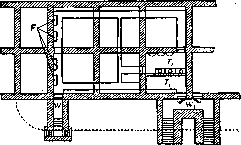
Figure 10. Anti-chemical equipment of a basement: F-filters; Г, T-vestibules; W-spare entrance; WV-active entrance.
which the internal distribution and volume of the room, medical equipment and supplies are adapted for providing first aid or stationary treatment of wounded and injured persons from poisonous substances. A shelter-first aid point as a rule must have at least three rooms arranged according to the pass-through system: 1) undressing room, 2) shower room and 3) room for staying of patients. Hospitals intended for treatment of persons affected by C. W. and equipped in an anti-chemical manner provide: a) wards for placement of persons affected by C. W., b) if possible a separate external entrance and c) arrange a pass-through room for sanitary processing of incoming persons affected by C. W. First aid points and hospitals intended for stationary treatment of persons affected by C. W. are equipped and supplied with special inventory, means and devices for decontamination and treatment in accordance with established supply norms. The said equipment of hospitals may also require corresponding changes and adaptations of their sanitary-technical installations (e.g., water supply, sewerage, heating). Anti-chemical equipment of sanitary transport: 1) Sanitary two-wheeled carts-from canvas sections impregnated similarly to a tent (see above), with hermetization of the cart body. 2) San. automobile-with hermetization of the entire shell, vestibule, filter with ventilator driven by a motor. 3) San. car and sanitary train equipped in a medical manner accordingly-are hermetized and supplied with a filter and ventilator. 4) San. airplane (anti-chemical equipment may be necessary for protection from poisonous substances of patients and wounded who cannot wear masks at the moment of ascent or landing of the airplane)-anti-chemical equipment also consists of hermetization, arranging a vestibule and a filter with a ventilator operating from the motor of the aircraft.-Shelters equipped in an anti-chemical manner occupy one of the most important places in the system of passive defense measures and tend to become widespread both at the front and especially in the rear for protection of the civilian population. Belonging to the means of chemical defense, in the implementation of which sanitary-hygienic consultation is especially necessary and responsible, shelters must be at the center of attention of the medical personnel participating in the defense of the country.
Related articles
Mentioned in
Cite this page
“Gas Shelters.” Soviet Medical Encyclopedia. English translation of Bolshaya Meditsinskaya Entsiklopediya, 1st ed. (Moscow, 1928–1936), ed. N. A. Semashko. https://sovietmedicalencyclopedia.pages.dev/article/gas-shelters/