Laminaria
Historical document, translated for reference. It reflects medical knowledge of the 1920s–30s and is not medical advice.
Summary
This article from the 1928–1936 Soviet medical encyclopedia covers the biology, toxicology, and medical use of Laminaria, a brown seaweed. It details the frog's life cycle, the properties of its skin secretions, and the specific technique of using dried Laminaria sticks to dilate the cervix uteri.
Encyclopedia article (1928–1936)
LAMINARIA, rods made of the stem and thallus of the brown seaweed Laminaria digitata; proposed in 1862 by Sloan; widely used by Braun for the dilation of the cervical canal of the uterus. From the dried stems of this plant, by sawing and turning, rods of different lengths and thicknesses (3–10 mm) are prepared, the thinner ones being usually solid and the thicker ones hollow. Distinguished by large, oval groups of larvae shifted more to the rear than in Rana esculenta. The head is bluntly pointed. Dark triangular spots on the temples. Length up to 9 cm. In the European part of the USSR it is widespread except in the Crimea and the Ciscaucasian steppes. It lives in forests, groves, gardens, and swamps. In water it sits in spring and late autumn. It mates even under ice. It spawns in March, April, and the first half of May. Up to 600–1,000 eggs. Metamorphosis proceeds quickly, by the second half of May or the beginning of June. It winters either buried in slime or in earth burrows, in hollows under leaves, etc. It is insectivorous; it eats bees without harm to itself. Of other species known in the USSR are: Rana arvalis (the sharp-nosed, or marsh frog), Rana asiatica, etc. Toxicity of the skin secretion of frogs. The secretion of the serous glands of the skin of Rana esculenta is poisonous. 6–12 mg of dried poison per 1 kg of weight of a rabbit is a lethal dose upon intravenous injection. One frog yields poison in an amount of 12 lethal doses for a rabbit. Death occurs from paralysis of respiration. The poison of the frog in a dilution of 1:80,000 parts of water is lethal for fish and for tadpoles when they are kept in the indicated solution. In this respect the poison of Rana esculenta stands midway between the poison of the rattlesnake (Crotalus adamanteus) and the cobra (Naja tripudians). The skin secretion exhibits strong local irritating action, especially on mucous membranes and the conjunctiva of the eye (rabbit). Subcutaneous injection is accompanied by severe pain and leads to the formation of an abscess and necrosis. The heart is paralyzed by weak solutions of the poison; the isolated heart of L. stops in systole. Striated and smooth muscles are quickly paralyzed by the poison. Blood pressure in a cat falls upon intravenous injection. The pupil of the enucleated eye of L. expands persistently upon the action of a solution of 1 part of poison to 25,000 parts of water. "The skin poison of Rana esculenta hemolyzes the erythrocytes of many animals. In terms of its pharmacological properties, the poison of L. belongs to the group of sapotoxins and bile acids. The skin poison of frogs of other genera, in particular Dendrobates tinctorius (South America), is used by wild tribes for poisoning arrows. - Parasites of L. In the rectum parasitize huge infusoria Opalina ranarum and small ones Nyctotherus cordiformis. Of parasitic worms, Haplometra cylindracea (=Distcmum cylindraceum) in the lungs, Gargo-clera cygnoides ( = Distcmum cygnoides) and Polystcmum integerrimum in the bladder are common. In the lungs, the nematode Rhabdias bufonis ( = Rhabdonema mgrovenosum) is common. - Frogs are edible. The hind legs are used for food. L. is an important laboratory animal (see), widely used for the purposes of physiology, pharmacology, toxicology, general pathology, and histology.
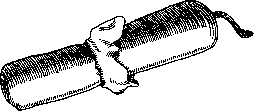
Laminaria, removed together with the mucous membrane of the cervix (at the level of the internal os).
of the internal os. For the treatment of infertility, it is recommended (Tixier) to leave the Laminaria stick in place for 20–36 hours depending on the case. When applying the Laminaria stick for this purpose, to ensure greater effectiveness, one must weigh the indications precisely, taking into account the age of the patient, previous diseases, and inflammations of the female genital sphere. The introduction of Laminaria sticks is not recommended on an outpatient basis (danger of infection and injury due to displacement of the stick). The merit of this method of dilating the cervical canal lies in the fact that it does not require anesthesia and, with slow dilation, the wall of the canal is not damaged (which is of particular importance in primiparas with an intractable cervix). The negative side is the possibility of infection (especially upon repeated introduction of thicker sticks) and perforation of the uterus (upon outpatient application). Cases have been described of the Laminaria stick slipping into the uterus (Rashkes), its breakage (Gubariev, Serdyukov), and detachment of the mucous membrane of the cervix (in the region of the internal os) together with the Laminaria stick (Seletsky) (see figure). Cases of the introduction of Laminaria accompanied by an increase in body temperature are also noted. Thus, Strauss and Hesse (Strauss, Hesse) in 800 cases of dilation of the uterus with a Laminaria stick followed by examination and emptying of it had respectively 7% and 10% of fever above 38.0°. Amrsbach even indicates that in cases of pregnancy when applying the Laminaria stick while observing the strictest asepsis, an inflammatory condition of the tubes is often observed. But there are authors who have repeatedly applied the Laminaria stick and have never seen not only infection but also an increase in temperature (Pobedinsky). To avoid possible complications, it is recommended to check the quality of the Laminaria stick before introduction, and to insert and remove it carefully to prevent breakage and cracks. The opinions of individual modern schools regarding the application of the Laminaria stick diverge: some gynecologists, considering possible complications, limit its application to a considerable extent and prefer the one-time rapid dilation with Hegar dilators; others, however, consider the Laminaria stick to be the best and most gentle method of dilating the cervix (Stoeckel) and that further dilation with metallic dilators and curettage of the uterine cavity appears to be safer (Pobedinsky).
Related articles
Mentioned in
Cite this page
“Laminaria.” Soviet Medical Encyclopedia. English translation of Bolshaya Meditsinskaya Entsiklopediya, 1st ed. (Moscow, 1928–1936), ed. N. A. Semashko. https://sovietmedicalencyclopedia.pages.dev/article/laminaria/