Preformation
Historical document, translated for reference. It reflects medical knowledge of the 1920s–30s and is not medical advice.
Summary
This historical article from the 1928–1936 Soviet Medical Encyclopedia details the doctrine of preformation in embryonic development during the 17th and 18th centuries, covering the views of Swammerdam, Malpighi, Malebranche, Leeuwenhoek, Hartsoeker, and others.
Encyclopedia article (1928–1936)
PREFORMATION (Latin praeformatio), pre-formation, the doctrine of embryonic development that dominated the 17th and 18th centuries. A detailed scientific substantiation of preformation was provided in the studies of Jan Swammerdam (1637–1680). Subtle research on the development of insects (1669) led him to discover at all stages the basic parts and organs of the future insect: "A beetle is merely a pupa that has emerged from its skin and grown, just as a pupa is merely a worm that has changed its skin and altered or transformed in a similar manner; consequently, these different states reveal one and the same insect in three different manifestations." What he discovered in insects, Swammerdam also applied to the development of the frog (1672), in the egg of which he saw a small frog; this is all the more surprising since he was also the first to observe cleavage into two blastomeres, without, of course, understanding its meaning. The mode of development studied in insects is, according to Swammerdam, universal, and he sought in plants, and even in humans, all the same stages of pupa and larva. In Swammerdam, we already encounter the foundations of the theory of encasement (emboitement; the word itself was proposed only later, apparently by Andry in 1700), according to which all embryos were created at once "in the loins of Adam and Eve." Marcello Malpighi (1628–1694) carefully studied the development of the chicken egg (1672). It seems surprising that, although Malpighi observed the development process in detail and established the absence of a visible embryo in the unfertilized egg, he nevertheless joined the preformationists and believed that the embryo always pre-exists in the egg. This is explained in part by an erroneous observation of an unincubated egg, in which he found a formed embryo (possibly developed under the influence of intense heat). In addition, Malpighi's views differed in details from preformation. He believed that the embryo is formed entirely and at once immediately before the beginning of development (metamorphosis in Harvey's understanding) and thus did not adhere to the view of the "encasement" of embryos. A broad philosophical and religious justification for these first scientific proofs of preformation was given by Nicolas Malebranche (1638–1715), the most authoritative philosopher of his time. In 1674, in his famous work The Search after Truth, he first definitively developed the view that all living creatures were created simultaneously at the creation of the world in the form of embryos enclosed in the original organisms. To support these views, he referred to the data of Swammerdam and Malpighi. The fact that we do not see these embryos enclosed within one another, and that they must be of infinitely small magnitude, should not stop us, "since spiritual vision is much broader than bodily vision." The idea of preformation and the "encasement" of embryos found religious and philosophical approbation in Malebranche, and it is therefore not surprising that this theory, which harmonized so well with both scientific data and the teachings of the church, received wide distribution and almost universal recognition. However, if up to this point preformation was sought in the egg, and the role of male seminal fluid in fertilization was unclear and remained non-essential (ovists), then with the discovery of spermatozoa, preformation acquired a new channel for development.
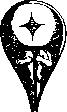
Antonie van Leeuwenhoek, having discovered (1677) in seminal fluid a countless number of living little animals (animalcula), created (by 1683) a theory of fertilization and development opposite to the views of the ovists. He believed that the sperm penetrates the egg, loses its tail, and the embryo is formed from its head; the egg serves only as a place for the development and nourishment of the embryo. He asserted that there are two kinds of spermatozoa—male and female. Thus, in contrast to the ovist theory—"all from the egg" (ex ovo omnia—Harvey), he asserted that the basis of development is in the sperm (ex animalcula) and gave rise to the theory of animalculists or spermaticists. Leeuwenhoek joined the theory of preformation—in a very small sheep embryo he discovered the main parts of the adult animal and therefore saw no reason why they should not be present earlier, all the way back to the spermatozoon. However, he categorically denied that anything of the kind could be seen in the spermatozoon with the help of a microscope: although the spermatozoa of humans and animals are not miniature children and embryos5 nevertheless the latter originate from them. But what the precise observer Leeuwenhoek so firmly denied, more resolute people would see or invent. Nicolaas Hartsoeker, who disputed the priority of the discovery of spermatozoa, suggested (1694) that in each spermatozoon "there is enclosed and hidden under a thin and tender skin an animal in miniature, male or female of the same species in whose semen it is found." Thus, "if one could see through the skin hiding it, this little animal, perhaps we would see it as represented in the illustration" (Fig. 1).
It is worthy of wonder how Hartsoeker imagined the process of fertilization: "Each egg has only one opening for the entry of a worm... and immediately upon the penetration of one, this opening closes and prevents the passage of another worm; but if by chance two worms penetrate... and the two animals raised there are joined by any parts of their bodies, they form a monster." He joined the theory of encasement, yet gave it an interpretation in the spirit of animalculism: the first males, and not females (according to the views of the ovists), contain the germs of all individuals of the species of both male and female sex. It is interesting to note that later Hartsoeker apparently abandoned both the theory of animalculism and preformation. The "discovery" of what Hartsoeker had only supposed was not long in coming. In 1699, a short communication with drawings appeared under the signature of Dalenpatius, in which he claimed that he had managed to observe a human spermatozoon that had shed its skin and revealed a miniature human being beneath it (Fig. 2). This communication caused sharp criticism from Leeuwenhoek. As was discovered significantly later, under the pseudonym of Dalenpatius was hidden...
a certain Plantade (F. de Plantade) for the purposes of the most shameless mystification. By this time, the doctrine of animalculists and preformation was used (for the first time in 1695) by the famous philosopher Gottfried Wilhelm Leibniz to substantiate both views on the relationship between soul and body: "there is never any complete birth nor complete death, consisting in the separation of the soul"; souls do not leave the body, but represent an individuality united with it, therefore "not only did the organic body exist before conception, but also the soul in this body and in a word the animal itself," and thus the entire organic world originates from "seminal animals," which arose "not otherwise than together with the beginning of the world" (1702, 1714). In the 18th century, ovists regained dominance. This is explained by great optical difficulties in studying spermatozoa and complete ignorance of their origin in seminal fluid. It is not surprising therefore that the view of spermatozoa as independent animals parasitizing the bodies of more complex organisms became extremely widespread. They were even classified among flagellates, infusoria, etc. A brilliant refutation of animalculism was the discovery of parthenogenesis in aphids by Charles Bonnet (1740)—aphids reproduced for many generations in a row without males and consequently without any participation of spermatozoa in development. This discovery also influenced the views of the greatest physiologist of that time, Albrecht von Haller, who in the first period of his activity was an opponent of preformation. However, a complete turnaround in his views occurred as a result of his own observations on the development of the chicken (1758). He discovered that the membranes covering the yolk of the egg pass directly into the membranes of the embryo; consequently, the yolk is part of the embryo, and since the existence of the yolk in an unfertilized egg is indisputable, the embryo itself preexists in the latter. This discovery was a strong support for preformation, or, as Haller usually called it, evolution (evolutio). By this time, the theory of "evolution," or preformation, was just experiencing a great need for support by new facts, since a multitude of enigmatic phenomena had accumulated that came into contradiction with the preformation theory. Such were the data on monstrosities, hybridization, regeneration, and many others. A fervent champion and propagandist of preformation was Bonnet (1720–1793). Throughout his life in numerous theoretical works, he showed great wit and ingenuity, but at the same time extreme instability and variability of views in defending the theory of preformation. Although preformation and the theory of "encapsulation" (emboîtement) owe their wide distribution largely to him, in a number of issues he has to make a number of concessions and create many auxiliary proposals. Under the influence of Leibniz's views, Bonnet put forward the idea of the indestructibility of preformed germs—if an organism perishes, the germs contained within it do not perish, but pass into the earth or other organisms. In these views, Bonnet approached a peculiar theory of panspermism or dissemination, having diverse representatives, usually of a non-preformationist direction (Buffon, Oken). The last major representative of the theory of preformation is Abbé Lazzaro Spallanzani (1729–1799). His brilliant experiments on artificial insemination dealt a decisive blow to animalculism, although, as we now understand, only thanks to false conclusions. Thus, from the experiments that heavily diluted sperm does not lose its fertilizing power, while filtered sperm, on the contrary, loses it, he concluded that spermatozoa were completely uninvolved in the process of fertilization (!). He also made observations on Volvox, which in the eyes of contemporaries confirmed the theory of "encapsulation": inside the Volvox one could see simultaneously from 3 to 6 successive generations. By the end of the 18th century, the first signs of the fading of preformation and the strengthening of the theory of epigenesis (see) appear. However, the preformation theory turned out to be unusually resilient: the detailed theory of epigenesis proposed by Caspar Friedrich Wolff and supported by careful observations on the development of the chicken (1759, 1764, 1768) attracted almost no attention. Wolff claimed that development begins from a completely structureless, liquid, and transparent substance and is directed by the "essential force" (vis essentialis) inherent in it (for details, see Epigenesis). It is not surprising that this could not seem convincing, since the absence of visible structure at the beginning of development and changes in the shape of the embryo during the process of development were not at all denied by the most thoughtful evolutionists—these phenomena were explained by the transition of parts of the embryo as development progressed from an invisible to a visible state, from transparent, miniature, and liquid to dense and larger. The explanation of the origin of such amazingly organized living beings through purely mechanical processes from a completely structureless mass seemed completely unserious and unconvincing. Much greater success was achieved by the purely polemical speech of Johann Friedrich Blumenbach, representing a summary of the difficulties and objections to the preformation theory (1780). Blumenbach declares himself a supporter of epigenesis and considers the entire development process as the result of the action of the vital principle "nisus formativus." Immanuel Kant joins the theory of epigenesis (1790), Erasmus Darwin gives a good critique of preformation (1794) and a number of others; however, all this does not prevent many from adhering to preformation as before, including Georges Cuvier (1769–1832). For the final fall of preformation, a number of discoveries in the field of the fertilization process and development were required: the refutation of the ovists' theory and the proof of the equal participation of the egg and spermatozoon in fertilization, made by Jean-Louis Prévost and Jean-Baptiste Dumas (1821, 1824); the clarification on the basis of the cell theory that the egg (Theodor Schwann, 1839) and the spermatozoon (Albert von Kölliker, 1841) are modified cells; the proof of the penetration of the spermatozoon into the egg during fertilization and the process of cleavage—Martin Barry, George Newport (Barry, 1840; Nelson, 1851, 1852; George Newport, 1851–1854); finally, the study of development and the formation of germ layers—in addition to the aforementioned Caspar Friedrich Wolff, Christian Heinrich Pander (1817) and main of all Karl Ernst von Baer (1828). However, if the old preformation theory with its preexistence of the embryo and "encapsulation" died irrevocably, then at the very end of the 19th century a revival of preformation takes place at a higher level, on the basis of emerging experimental embryology. The enormous development of descriptive embryology in the first half of the 19th century did not bring one closer to understanding how embryonic development from a simple structureless egg can be understood on the basis of epigenesis. On the contrary, the brilliant successes of cytology in the second half of the 19th century (the discovery and study-
PRECIPITATION
ation of karyokinesis, the chromosome individuality theory, reduction division and its role in fertilization) immediately directed attention to the possible role of complex, intimate, sometimes invisible cell structures and especially the nucleus in the process of development. It is not surprising that precisely at this time (the 1870s-1880s) we encounter, quite independently in a number of authors almost simultaneously, the idea of preformed elements in the egg as the basis of development. Thus, His (W. His, 1874) put forward the theory that certain regions of the egg represent organ-forming primordia. R. Lankester (R. Lankester, 1877) speaks of "invisible differentiation, preformed beforehand." Whitman (1878) asserts that "until we can say that the embryo is preformed, we can assert that it is predetermined." Rabl (1879) speaks of the grouping and distribution of cytoplasmic particles and molecules in the unfertilized egg. Flemming (1882) believes that "if the egg cell substance has a definite structure..., we must recognize in it the basis for the predetermination of development." It is precisely at this time that W. Roux (1850-1924) begins a series of brilliant works and establishes the tasks and methods of developmental mechanics (see). In 1883, Roux suggests that chromatin granules are carriers of various properties (Qualitaten); he assumes two kinds of division—quantitative and qualitative; and finally, that "for the development of the embryo... the nucleus is more essential than the cell body." In the following year of 1884, the nuclear theory of heredity is already definitely asserted by Strasburger and O. Hertwig. These ideas are picked up by A. Weismann (1885), who applies Roux's assumption of qualitative and quantitative divisions to explain the process of ontogeny. However, this theory receives its completed form after Roux's work on obtaining half-embryos from one of two blastomeres (1888), as a result of which he asserts that the developmental process is a "mosaic work." Weismann develops the "mosaic theory" to its logical conclusion, assuming that hereditarily unequal nuclear divisions occur in the process of ontogeny (1892) (for details, see Heredity). In the coming years, the "mosaic theory" provokes sharp criticism and experimental refutation, especially on the part of Driesch (H. Driesch) and O. Hertwig. A whole series of objects is discovered in which individual blastomeres possess the ability to give rise to entire embryos. All this leads to the rejection of "qualitative," "hereditarily unequal" divisions, and consequently of the entire mosaic theory (see Promorphology, Developmental mechanics). Nevertheless, we have a peculiar "return" to the theory of preformation. Just like the latter, modern science considers the egg before development to be endowed with invisible diversity. However, the preformation of the 18th century sought in this diversity a miniature picture of the embryo, its preformation in all main parts (predelineation); and thus development-evolution in the sense of Haller and Bonnet is merely the transition of invisible diversity into visible diversity without qualitative changes in structure and form. Historically, therefore, the theory of epigenesis, which asserted the neoformation of diversity, was legitimate. But epigenesis asserted the emergence of this diversity from a simple egg, completely devoid of any diversity. Therefore, W. Roux is right when he asserts that epigenesis in this sense has been refuted. It is necessary to distinguish, as the same Roux correctly suggested, between preformation and evolution. Preformation is that specific structure and composition of the egg which are "given" before development, i.e., belong to genetically preceding development and in this sense are "preformed." Preformation understood in this way cannot be denied by anyone on the basis of modern data. Evolution (ontogenetic) is not a process of development from preformed elements. The modern understanding of ontogeny thus liquidates the old dispute between preformation and epigenesis. Common to both trends is the incorrect understanding of the developmental process. From the point of view of old preformation, development is merely simple growth; such a point of view is "dead, poor, dry" (Lenin); epigenesis, although it speaks of the neoformation of diversity, nevertheless does not derive this diversity from the interaction of the internal structure of the egg and its surrounding environment, thus bringing this diversity from the outside. By liquidating this dispute, modern science puts an end to the idealistic and mechanistic concepts of ontogenetic development. The core of modern views on embryogenesis is the recognition of the specific, differentiated structure of the fertilized egg and the further qualitative transformation of this structure at every stage of individual development.
Related articles
Mentioned in
Cite this page
“Preformation.” Soviet Medical Encyclopedia. English translation of Bolshaya Meditsinskaya Entsiklopediya, 1st ed. (Moscow, 1928–1936), ed. N. A. Semashko. https://sovietmedicalencyclopedia.pages.dev/article/preformation/