Standardization
Historical document, translated for reference. It reflects medical knowledge of the 1920s–30s and is not medical advice.
Summary
This article from the 1928-1936 Great Medical Encyclopedia outlines the system and role of standardization in Soviet healthcare and industry. It covers standards for medical supplies, instruments, pharmaceuticals, biologicals, and medical documentation, detailing how standardization serves to improve product quality and support socialist construction.
Encyclopedia article (1928–1936)
STANDARDIZATION, the establishment of model norms and requirements for individual products, raw materials, devices, specific processes, and the like, with the aim of improving their quality, simplifying the production process, and facilitating the interchangeability of parts. Standardization in the conditions of socialist construction has the purpose of eliminating everything backward in production, promoting the organization of mass production, and improving product quality. According to the decree of the Council of People's Commissars of the USSR dated June 17, 1933, No. 1230, the bodies of standardization in the USSR are: 1) The All-Union Council of Standardization under the Council of People's Commissars of the USSR, which considers particularly important issues related to standardization; 2) The All-Union Standardization Committee under the Council of Labor and Defense, which is the highest directive body in this field and deals with the direct review and approval of All-Union Standards (OST) and the most important objects; 3) standardization committees within the People's Commissars of the USSR, approving standards mandatory for application throughout the territory of the entire Union, on par with those approved by the All-Union Standardization Committee; 4) departmental standardization bodies within republican People's Commissars, main committees, and trusts, approving standards of limited scope. Standardization in the field of healthcare proceeds along several sections. On the one hand, for a number of items produced for healthcare by industry—such as disinfectants, sanitary-household items, and dressing materials—there are All-Union Standards approved by the All-Union Standardization Committee. Next come standards directly approved by the People's Commissariat of Health; such are the standard requirements for medicines set forth in the pharmacopoeia. Of medical instruments, only transformer X-ray apparatuses (standard type) (Figs. 1 and 2) are standardized in the form of All-Union Standards (Nos. 3600 and 3601). These standards establish the classification of apparatuses, the load scale, general technical requirements for them, rules for factory testing of the complete apparatus and its parts, and rules for measuring high voltage in X-ray apparatuses. Regarding hospital furniture (beds, tables) and linen, standardization work has been initiated by the People's Commissars of Health and is in the design stage. Standard medicinal formulas are of great importance for healthcare. The existence of such formulas opens up the possibility of factory mass preparation of medicines, which is important in terms of reducing their cost, improving quality, and accelerating dispensing. A list of standard medicinal formulas numbering 341 prescriptions was approved in 1930 by the Scientific Medical Council and published as a separate book (Medgiz, 1930). In the typification (standardization) of formulas, the compilers, as indicated in the preface, proceeded from the fact that 'combinations of medicines required for proper treatment, with full guarantee of the interests of the patient and public health, can be brought without special difficulty to a certain number of standard formulas.' In addition to the formulas recommended by the People's Commissariat of Health, regional health departments also issue local standard medicinal formulas. The introduction of standard formulas into practice is very significant: in 1933, almost 75% of all medicines dispensed from pharmacies of the RSFSR fell to the share of standard ones. Special standard requirements have been established for export medicinal plant raw materials (marshmallow root, licorice, ergot, and similar medicinal plants). The standard for this raw material was approved as mandatory for exporting organizations by order of the People's Commissariat of Trade No. 51 of March 26, 1927, and published as a separate book (State Standard of Export Medicinal Raw Materials, Publishing House of the People's Commissariat of Trade of the USSR, 1927). In 1930, the All-Union Standardization Committee approved and published All-Union Standards for medicinal plant raw materials used also within the country (All-Union Standards Nos. 4285-4303, 4350-4361, and others). Of great importance in healthcare is the standardization of inoculants (vaccines, toxins, sera), which comes down to establishing the number of microbial bodies or immunizing units in 1 cm3 of a given substance. This standardization is carried out in the RSFSR by the State Scientific Institute for Control of Sera and Vaccines (see Control of Bacterial Preparations).
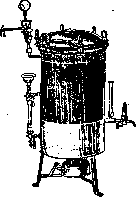
Figure 2. Vertical autoclave (standard).
No less important is the standardization of organ preparations (see Organ preparations) and so-called new galenicals (adonylen, gitalen, etc.). The standardization of these preparations consists in the fact that each batch of the preparation is tested on animals or isolated organs of the latter. Then the preparations are brought to a specific content of active principles, regardless of their fluctuations in the starting raw material (animal for organ preparations and plant for new galenicals). Thus, a preparation with a definite physiological effect is obtained, i.e., a standard one. The standard of these preparations is expressed in units of physiological action. Thus, for the tincture of digitalis, the unit of action is considered to be the dose capable of causing a systolic heart arrest in a male forest frog weighing about 30 g within 1 hour. Units of action vary for different preparations, depending on their purpose and the type of physiological effect they exert on animal organs. Officially established standards for organ preparations and new galenicals do not yet exist in the USSR. The standardization of these preparations is carried out by the organizations producing them on the basis of their internal standards. The USSR Pharmacopoeia contains only methods for testing the physiological action (pharmacodynamic value) of the starting raw material for preparations of 'new galenicals'—digitalis leaves, fern herb, strophanthus seeds, and ergot, and from organ preparations—hydrochloric adrenaline solution and pituitary posterior lobe extract. Standardization also covers a number of other areas in medicine, such as the establishment of standard forms of medical reporting and accounting, standard registration forms, etc., which is carried out by the People's Commissariat of Health and local health departments. Of great importance are standard methods of laboratory research—clinical (determination of hemoglobin in blood, sugar in urine, etc.), sanitary (analyses of air, water, foodstuffs, etc.), standards of devices determining the power of action of various physical treatment methods (dosimeter in X-ray therapy, etc.). Such methods exist and are recommended in various printed works by individual authors. Officially approved mandatory or even recommended standards in this area do not exist. Regarding the standardization of food products, see Food legislation.
Bychkov. Standardization of bacterial preparations and sera. All preparations produced by bacteriological institutes for prophylactic, therapeutic, and diagnostic purposes must meet standard requirements defined for each preparation and adopted in the USSR. Among prophylactic preparations, bacterial vaccines must have a specific number of microbes per 1 cm3, which number is determined by counting microbes in a special Tom counting chamber with a depth of 0.02 mm. In view of the fact, however, that such a method for determining the number of microbes takes a very time, it is usually used only by the Control Institute (Moscow) in the manufacture of standard microbe emulsions, which are then distributed to all manufacturing institutes. By the latter, the standard is determined optically, by comparing the transparency of bold type through a test tube of the standard with the corresponding test tube of the vaccine under study. The most commonly used standards are 500 million, 1, 11/2, 2, 21/2, 3, and 4 billion microbial bodies per 1 cm3. In addition, bacterial vaccines must meet the following requirements: a) absence of foreign microbes, b) sterility, c) presence of immunogenic properties. For bacterial vaccines used in the form of tablets (per os), standard requirements are expressed in the fact that they must have: a) sufficient density, b) easy solubility in water, c) be sterile with respect to the specific microbe (the number of foreign, non-pathogenic microbes must be limited to 5-10 pieces). The most widespread bacterial vaccines have the following standard quantities of microbial bodies: divaccine (typhoid + paratyphoid B) - 12/3 billion; cholera - 4 billion; gonococcal - 500 million; staphylococcal - 1 billion; scarlet fever combined - 1 billion + 2000 skin doses of scarlet fever toxin. Each tablet (typhoid, dysentery) must contain 100 billion microbial bodies. Diphtheria anatoxin, used for the immunization of children, must: a) be sterile, b) harmless (a guinea pig must tolerate 5 cm3 of anatoxin without harm), c) contain in 1 cm3 at least 15 immunogenic units by flocculation, d) a guinea pig that has received 5 cm3 of anatoxin must survive after a month from the injection of 30 minimum lethal doses of diphtheria toxin (30 dim). All therapeutic sera must meet the following requirements: a) absolute sterility; b) a specific amount of preservative (no more than 0.5% phenol or 0.4% tricresol), which is determined by the injection of 0.5 cm3 of the test serum into a mouse weighing 15 g; the mouse must remain healthy; c) harmlessness (a guinea pig weighing 350 g must tolerate an injection of 10 cm3 of serum without harm to health); d) must not give a precipitation reaction with human serum. In addition, those sera whose potency can be determined experimentally must contain at least the established amount of therapeutic units (AE), which is determined by titrating their potency on various laboratory animals. As an example, below is a brief description of the method for titrating diphtheria antitoxic serum according to the method of Ehrlich, adopted by the International Commission for the Standardization of Sera. Ehrlich adopted as a unit of comparison between diphtheria sera a certain amount of antitoxin which neutralized 100 minimum lethal doses of the diphtheria toxin he had at that time. This "neutral" mixture, when injected into a guinea pig weighing 250 g, does not cause any morbid phenomena in it, including edema at the site of injection. This amount of antitoxin was named by Ehrlich the "antitoxic unit" - AE. In view of the fact that this unit of measurement was taken arbitrarily, steps had to be taken to ensure that it remained unchanged. For this purpose, Ehrlich developed a method for preserving this standard serum in which the influence of humidity, atmospheric oxygen, light, and heat is excluded. This standard dry diphtheria serum is obtained from the Institute for Experimental Therapy in Frankfurt am Main. When testing diphtheria antitoxic serum, the procedure is as follows. 1 cm3 of diluted standard serum is poured into a series of glasses or small flasks in such a calculation that exactly one antitoxic unit (AE) is contained in this 1 cm3, and then decreasing amounts of aged diphtheria toxin, the properties of which have been thoroughly studied beforehand, are added to them. Then, various amounts of physiological solution are added to these mixtures so that the total amount of liquid in each glass is 4 cm3, and either immediately or after letting the mixtures stand for 11/2-13/4 hours (various options), it is injected under the skin of a corresponding number of guinea pigs weighing 250 g. Some of the guinea pigs will die at various intervals, and some will survive. It is necessary to take the guinea pig that died from this mixture after 31/2-4 days, and note the amount of toxin that was in the mixture injected into it. Suppose that the amount of toxin was equal to 0.36 cm3. This amount will be the "experimental dose" and consequently, when mixed with 1 AE of any diphtheria antitoxic serum, should cause the death of the guinea pig in 4 days. After establishing the experimental dose of toxin, the test serum is taken and diluted with a physiological solution so as to obtain the expected 1 AE in 1 cm3. Consequently, if we assume that our serum contains 800 AE in 1 cm3, it must be diluted 800 times, 1 cm3 of this dilution mixed with the experimental dose of toxin (0.36), physiological solution added up to 4 cm3, and injected under the skin of a guinea pig weighing 250 g. If the guinea pig dies from this mixture in 31/2-4 days, it means there was indeed 1 AE in the mixture; if the guinea pig dies in 2-21/2 days, it means there was no 1 AE in the mixture, and if it dies later or does not die at all, it means there was more antitoxin in the mixture than 1 AE. In either case, the experiment will have to be repeated, correcting the dilution of the serum in one direction or the other, and achieving such a dilution that the mixture of 1 cm3 of it with the experimental dose of toxin would cause the animal to perish in 31/2-4 days. Thus, if we have established, for example, that the guinea pig dies within the required period from a mixture of 1 cm3 of serum diluted 800 times with the experimental dose of toxin (0.36), we conclude that the given serum has 800 antitoxic units (AE) in 1 cm3. In addition to the described method for determining AE in diphtheria serum, there are several other methods, of which the method of Römer is widely used, in which the mixture of toxin and antitoxin is titrated so that, when injected in an amount of 0.2 cm3 intracutaneously into a guinea pig, it causes minor necrosis (or, according to the English variant, edema). This method, characterized by high accuracy, makes it possible to perform up to 6 AE determinations on a single guinea pig and also makes it possible to titrate not only whole AEs, but also their tenths and even hundredths. Furthermore, there are methods for determining the potency of diphtheria and other antitoxic sera by the flocculation method proposed by Ramon, and the ring precipitation method proposed by Gen, Tsyn, and Chertkov. These in vitro titration methods have acquired great importance in the production of sera as very easy and fast and quite suitable for tentative titrations in the process of horse immunization. Among the sera subject to titration, besides diphtheria, are included: tetanus, dysentery, botulinum, 4 sera against gas gangrene, pneumococcal, scarlet fever, and antivenom. The titration of all these sera is performed on various animals (rabbits, guinea pigs, white mice, hornless goats, etc.) by injecting them with the test serum either prior to or simultaneously with a specific dose of the corresponding toxin or live culture. Sera that are not yet amenable to experimental titration include streptococcal, gonococcal, meningococcal, and typhoid sera. Sera used for diagnostic and forensic purposes do not have specific standards, and they are only required to have the highest possible titer, both agglutinative and, in particular, precipitative, which are necessary to avoid group reactions that could mislead researchers.
Standardization of drugs is the determination of the quality and strength of action (activity, active value) of a medicinal product and bringing it to a defined (conventional) norm. Usually, the strength of action of drugs is determined by testing on animals or on isolated organs (biological or physiological valorization), more rarely on plants or cultures of microorganisms; many drugs are standardized according to physical and chemical indicators. Bringing the strength of action to the norm corresponding to the strength of action of a certain sample (standard) is called standardization proper or normalization. Biological standardization is applied to substances whose chemical testing is difficult or not yet developed; in individual cases, the chemical characteristic generally does not provide sufficient grounds for evaluating physiological action. Cardiac and uterine remedies, organopreparations, preparations whose action depends on vitamin content, as well as sera and vaccines, require biological standardization. Many other remedies that are standardized chemically still require additional physiological valorization. Standardization as a rule precedes the development of chemical tests, and the latter should be regarded merely as a more convenient, rapid, and economical method of testing, the value of which depends on how well it is proven that chemical indicators unambiguously determine the strength of action of the preparation and that their data coincide with the results of physiological valorization. Often, chemical evaluation and standardization complement each other (opium, arsenobenzenes). The first proposal for the legalization of biological standardization was put forward by Jaquet and Houghton in connection with the development of physiological evaluation of digitalis preparations (1898); individual methods of physiological testing had been proposed considerably earlier. In 1916, for the first time, the US Pharmacopeia, 9th edition, adopted monographs on biological standardization. At present, the majority of pharmacopeias (including the USSR Pharmacopeia VII) have legalized the biological standardization of a number of agents. A standing International Commission on the Biological Standardization of Drugs operates under the League of Nations, whose tasks include the unification of standardization methods and establishment of norms, the storage of standard preparations (international standards), etc. Substances whose activity (valor) is higher than the norm are diluted to the norm with indifferent diluents (sugar, dextrin, starch for dry preparations, water or alcohol of suitable strength for liquids) or with preparations of the same name that showed a strength of action below the norm during valorization.
I. Obergard.
Related articles
Mentioned in
- DENTAL PROSTHESES
- Dwellings
- Fertility
- Food Legislation
- House Fungus
- Individual First Aid Packet
- Industrial Protective Equipment
- Kumis
- Kurotology
- Likhachev
- Occupational Hygiene
- Organotherapy (a2075)
- OST
- Physical Development of the Population
- Rest Home
- Sanitary Bacteriology
- Sergey Selitsky
- Special Protective Clothing
- Stretcher
- Urotherapy
Cite this page
“Standardization.” Soviet Medical Encyclopedia. English translation of Bolshaya Meditsinskaya Entsiklopediya, 1st ed. (Moscow, 1928–1936), ed. N. A. Semashko. https://sovietmedicalencyclopedia.pages.dev/article/standardization/