General Anesthesia
Historical document, translated for reference. It reflects medical knowledge of the 1920s–30s and is not medical advice.
Summary
General anesthesia is artificially induced deep sleep with loss of consciousness and complete insensitivity, primarily used for painless surgical procedures. The article traces the historical development of anesthetic agents from ancient times to the 1930s, detailing the discovery and adoption of ether and chloroform as primary anesthetics.
Encyclopedia article (1928–1936)
GENERAL ANESTHESIA. Under general anesthesia is understood artificially induced deep sleep, in which consciousness is lost and complete insensitivity occurs. Anesthesia is applied with the aim of being able to perform various manipulations painlessly, mainly surgical operations. History of Anesthesia. Attempts to induce general insensitivity of the organism to pain and experiments with the use of narcotic substances in various operations date back to deep antiquity. These include decoctions of certain plants, which were taken internally or with which sponges applied to the mouth of the patient were moistened. Ancient Egyptians and Chinese used Indian hemp, mandrake, poppy heads (opium), etc. The ancient world of Greece and Rome, with its fairly developed surgery, also used these means. In the Middle Ages, sleeping sponges were known; these sponges were prepared by impregnating them with special compositions, which included opium, hyoscyamine, mandrake and other substances; the sponges were then dried, and before use were moistened in warm water and given to patients to swallow the expressed composition or the sponges were simply applied to the mouth to inhale the vapors formed, which was supposed to cause a certain insensitivity to pain. For the same purpose, intoxication with alcohol was used for centuries and they even tried to use the fainting caused by bloodletting to perform operations. All these methods did not achieve their purpose and were forgotten. Only from the end of the 18th and beginning of the 19th centuries, in connection with the study and development of gaseous substances, conditions were created favorable for the discovery of chemistry of means suitable for anesthesia. In 1800, the Englishman Davy in Bristol reported on the narcotic properties of nitrous oxide (laughing gas). Before that, similar properties of sulfuric ether were known, but no one thought to use these means for surgical purposes. Even more so, when in 1828 the English physician Hickman through King Charles X applied to the French Academy of Sciences with a request to be allowed to test on people during operations nitrous oxide, which Hickman had used repeatedly with success on dogs, the French Academy rejected the proposal as ridiculous. In 1844, dentist Horace Wells for the first time consciously and successfully used nitrous oxide for anesthesia during several tooth extractions, but his proposal to use this more widely also did not meet with sympathy. Only in 1846 did the American physician and chemist Charles T. Jackson, based on old observations of Davy, begin to use ether for anesthesia purposes. On Jackson's advice, again American dentist William Morton tried inhaling ether vapors for the purpose of anesthesia to perform tooth extractions. Then, on the proposal of both these doctors from the city of Boston on the memorable day of October 16, 1846, the then famous American surgeon Warren in New York performed the first major operation for the removal of a tumor on the neck under complete ether anesthesia with complete insensitivity of the patient; anesthesia was administered by Morton. Thus, the glory and honor of the discovery of ether anesthesia undoubtedly belong to Jackson and Morton, which also found its official recognition in the awarding of both an equal special prize by the same French Academy, which 16 years earlier had rejected a similar proposal for anesthesia with nitrous oxide. The news of the discovery of general anesthesia quickly spread in Europe, and in the very next months ether anesthesia was successfully used by major surgeons in England, Germany, France and other European countries. In Russia in the same year, N. I. Pirogov introduced ether for anesthesia. Moreover, Pirogov, the first in the world, applied ether anesthesia on the field of battle under conditions of field surgery during the siege of the aul of Salty (1848). From this time, ether anesthesia quickly completed its victorious march throughout the civilized world. In 1847, the English surgeon and obstetrician Simpson in Edinburgh recommended and used for anesthesia chloroform, which had been discovered in 1831 by Subeyran in Paris and obtained by Liebig in Germany. Simpson pointed out that with chloroform anesthesia, sleep and anesthesia occur faster than with ether anesthesia. Since then, ether and chloroform, occasionally disputing primacy with each other, remain the most important and widespread means for general anesthesia to this day, and in recent decades there is a displacement of chloroform by ether, since the latter is a less dangerous means than chloroform. Various other narcotic substances proposed for anesthesia and continuing to appear until the very last time have not yet been able to replace either ether or chloroform. Types of Anesthesia. General anesthesia with a state of deep sleep, with complete loss of consciousness, with loss of sensitivity, muscle movements and reflex excitability, while maintaining cardiac and respiratory activity, can be achieved in various ways, for which different types of anesthesia are distinguished. Most often, the narcotic substance for general sleep is given for inhalation through the mouth and nose—the inhalation method of anesthesia. In addition to such a conventional introduction of the narcotic substance, there are other methods, however used much less frequently: introduction of the anesthetic substance into a vein—intravenous anesthesia, through the rectum—rectal anesthesia. Besides this, other methods of introducing narcotic substances are also possible: subcutaneous injection (e.g., scopolamine-morphine) or administration per os, but these types of anesthesia are significantly less perfect; complete sleep necessary for performing surgical operations is not achieved, and therefore they are currently used more in practice as auxiliary methods in other types of anesthesia or are used in minor operations in surgery and gynecology (vaginal operations, abrasions). Inhalation Anesthesia. The main means for inhalation anesthesia are ether and chloroform. For the same purpose, nitrous oxide (laughing gas), chloroethyl, bromoethyl are used. In recent years, in the West, narcylene (acetylene) has also begun to be used for general anesthesia. Ether and chloroform anesthesia. For general anesthesia, only absolutely pure preparations of ether (Aether sulfuricus pro narcosi) and chloroform (Chloroformium pro narcosi) can be used. In case of doubt about the purity of the preparations, various tests should be used to determine the purity of these narcotics (see Ether, Chloroform). Action of ether and chloroform. When inhaling ether or chloroform, their vapors enter the lungs, from there into the blood. After entering the blood, these substances have an action of varying degree on different tissues and cells of the organism. Both substances are protoplasmic poisons, and the cells of the central nervous system are most sensitive to them. These narcotics have a paralyzing effect on them. The first symptoms of action should be phenomena of impaired function of the cerebral hemispheres, then of the spinal cord and finally of the medulla oblongata. First, the cortex of the cerebral hemispheres is paralyzed, loss of consciousness, sensitivity occurs, and then motor ability. The function of the medulla oblongata is preserved the longest; if the centers located in it are paralyzed, death occurs. It is important to note the effect of general anesthesia on the cardiovascular system. Compared to ether, chloroform is a much more poisonous substance, acting to a large extent on the heart muscle. Experiments on animals have shown that to stop the heart, a concentration of ether vapors 40 times greater than that of chloroform is required (Kravkov). The main advantage of ether lies in the fact that the boundary between the narcotic dose of ether and the toxic and lethal dose is much wider than that of chloroform, therefore the use of ether is technically easier and significantly safer than chloroform. General anesthesia also significantly affects blood pressure. With the expansion of the vascular bed on the basis of the beginning paralysis of the vasomotor center, the heart, both with ether and with chloroform anesthesia, accelerates its rhythm, so that at the beginning of anesthesia there is no sharp drop in blood pressure. Further, the activity of the heart is noticeably weakened, and a significant drop in blood pressure occurs, especially sharp with chloroform, but constantly observed also with ether anesthesia. The still widespread opinion that ether anesthesia does not lower blood pressure is erroneous; recent research has shown that with deep ether anesthesia, as with chloroform anesthesia, blood pressure drops sharply. With the further action of ether and chloroform, in addition to the paralysis of the vasomotor center, leading to a drop in blood pressure, paralysis of the centers of the medulla oblongata and death due to paralysis of the respiratory center are observed. In parenchymal organs, changes are also observed after general anesthesia. Chloroform anesthesia produces the deepest changes in the organs. In the kidneys, congestion of blood vessels and cellular degeneration in the epithelium of the urinary tubules are observed. Clinically, impaired kidney function after chloroform anesthesia is manifested by the appearance of protein, cylinders, leukocytes and erythrocytes in the urine. Ether has little effect on the kidneys.
No less significant are the liver lesions. Particularly sharp are the changes in liver cells after chloroform; the condition can progress to yellow atrophy of the liver. Research into the functional activity of the liver and microscopic changes in the liver parenchyma (Ryzhikh and Fishman; 1928) showed that in the liver, the most severe changes from chloroform are observed on the 2-3rd day after N. In favorable cases, restoration of function occurs only on the 7-9th day after N. Research by French authors (Widal, Hutinel and others) also proved that chloroform, even in small doses, and ether in larger amounts, damage liver cells. If one of the main advantages of ether is that it has significantly less harmful effect than chloroform on the heart, kidneys, and liver, then on the other hand, ether acts somewhat irritantly on the lungs and mucous membranes of the respiratory tract. This irritation causes coughing and significant saliva secretion, which predisposes to bronchitis and pneumonia. Excretion of chloroform and ether occurs mainly through the lungs, therefore the smell of the narcotic substance from the mouth is felt for a relatively long time. Part is also excreted by the kidneys and skin. With the toxic effect of these narcotics, more severe degenerative processes are observed in the heart, liver, and kidneys (protein, cylinders, sugar, acetone in the urine). Usually these phenomena disappear, but sometimes they can lead to even fatal disorders. Theories of anesthesia-see Narcotic substances. The course of N. and its periods. In connection with the sequential shutdown of various functions of the central nervous system and according to the clinical course during general inhalation N., four periods are usually distinguished: the initial period, the period of excitement, the period of deep sleep, the period of awakening.- 1. Initial period. Its beginning is determined by the fact that the patient, so to speak, gets accustomed to the narcotic substance given to him. Usually after the first breaths, patients hold their breath, swallow air; a feeling of suffocation appears, some patients try to tear off the mask. Then dizziness, ringing in the ears, palpitations appear; the patient still responds to questions, but already speaks with a tangled tongue. Consciousness and sensitivity gradually disappear. The ability to external perceptions is lost. The pulse is frequent and full, breathing at first is often regular, somewhat accelerated, then with clouding of consciousness becomes deeper. The pupils are dilated and react to light. The corneal reflex is preserved. Reflex excitability is increased. The initial period ends with loss of consciousness and imperceptibly passes into the second period, the period of excitement.-2. The period of excitement is expressed differently in different individuals. Sex and age also have an influence. In children and sometimes in women, it may be completely absent or very short-lived. The state of the nervous system also affects the period of excitement, neurotics and hysterical individuals are prone to excitement. The period of excitement is most sharply expressed in strong men, especially in alcoholics. In the stage of excitement, consciousness is lost, motor restlessness appears, convulsive muscle contractions, sharp movements of the limbs. With a strongly expressed period of excitement, patients sit on the table, try to jump off it, toss about, struggle with the anesthetist and the assisting personnel, swear, shout, sing. Generally, the anesthetized patient during the period of excitement looks very much like an alcohol-intoxicated person; such a patient behaves like a heavily drunk person. Often breathing is held back, then the patient's face becomes cyanotic-purple, the jaws are convulsively clenched. The pupils are moderately dilated, react weakly to light. Gradually the patient calms down, convulsively contracted muscles relax, and gradually the third period necessary for his operation, the period of sleep, sets in.- 3. Period of deep sleep. The patient sleeps deeply and peacefully. His face is pale, the muscles are relaxed, any active movements disappear, and an arm or leg raised up falls lifelessly. Due to the relaxation of the chewing muscles, the lower jaw hangs down, the tongue can fall back, and breathing becomes wheezing. The pupils become narrow, and with deep N. they are maximally constricted and do not react to light. Reflexes are absent. The pulse is slow, breathing, which before this stage was frequent and intermittent, becomes regular, calm and more superficial. During surgical interventions, the patient must be kept throughout the operation in this stage of deep sleep.- 4. Period of awakening. From the moment of cessation of adding new portions of narcotic substances and the beginning of inhaling pure air, awakening from inhalation N. begins. In this stage, the paralyzed functions gradually return. The patient begins to move, reacts to pain, often there is vomiting upon awakening. The duration of this period varies depending on the narcotic substances; after chloroform, awakening occurs later than after ether. As in the period of excitement, upon awakening from sleep, patients behave differently; some, for example, drunkards and hysterical individuals, are again very excited, cry out, i.e., there is a kind of reverse course of N.; others, for example, children, wake up and then fall asleep peacefully again. In general, those who have awakened after N. feel quite unpleasant, a state of "post-anesthetic hangover" occurs, patients complain a lot of headache, lassitude, nausea and vomiting, which definitely characterizes N. as poisoning, and these phenomena of poisoning, usually depending on the duration of N., remain not only for many hours after N., but also for 1-2 days. Preparation for anesthesia. N. is a serious intervention and requires careful and thoughtful preparation for it. Only in emergency, not tolerating delay cases can one proceed
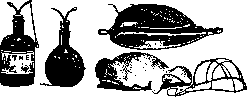
Figure 1. Droppers for ether and chloro-
fogma. A mask covered with flannel, Schimmelbusch's mask, Esmarch's mask frame, and the Yankauer-Gwathmey mask (at the top). k N. immediately after a rapid examination and study of the patient's b-ny. Preparations must go in several directions: preparation of the gastrointestinal tract, control of the cardiovascular system, kidneys and lungs, and if necessary, their preparation, and finally ensuring the balance of the nervous system and psyche. In connection with this, the following measures are carried out. The stomach must be empty, therefore the patient should not take any food 6 hours before N. If the stomach is full, then during N. vomiting almost always occurs. In emergency operations with a full stomach, it is necessary to pump out the stomach contents before starting anesthesia. The intestine is cleansed the day before the operation with an enema or a laxative, although the latter at present is not considered mandatory by many surgeons in all cases, as a laxative excessively weakens the patient and increases acidosis; this especially applies to exhausted patients. Internal organs must be thoroughly examined (heart, lungs, kidneys); if necessary, the heart is prepared by administering cardiac agents (strophanthus, digitalis); examination of urine before N. is mandatory; with severe changes in the above organs, general N. is contraindicated. With severe bronchitis, they must be cured or at least alleviated. In order for breathing during N. to proceed without hindrance, the patient must be undressed, it is necessary to remove constricting and tightening parts of clothing and unbutton the collar of the shirt. The mouth must be cleaned, removable dentures, jaws must be removed. Before starting N., the patient must lie in a comfortable horizontal position on his back, his head lies on a low roller or small pillow; it is important that the head lies straight, not being thrown back or tilted forward, which can interfere with proper and free breathing. To hold the patient during N., his legs are often tied to the table; this should be done with a wide and comfortable strap above the knees. The upper limbs must also be held; usually one hand is held by the anesthetist to monitor the pulse, the other hand, and sometimes both, are given to the assistant. There are also special straps with which the hands are held. Excited, agitated patients should be tried to be calmed; in a number of cases, bromide preparations are prescribed for several days, on the eve of the operation hypnotics: veronal or hedonal. To weaken the period of excitement, 1/2 hour before starting N., morphine is injected into the patient. The psychological impact and elimination of what excites (the sight of blood-stained bandaging material, instruments, loud extraneous conversations) is important. In a number of cases, it is advisable to start N. in a special room, and not directly in the operating room. Instrumentation and technique of N. For inhalation N., the following simple instruments are necessary (figures 1 and 2): 1. Masks. A large number of them have been proposed; the most convenient and widespread are the following models: a wire mask covered with gauze or flannel of the Esmarch or Schimmelbusch type, and these masks should be arranged so that the gauze or flannel can be changed after N. 2. Droppers in the form of a brown glass bottle, graduated, holding 50-100 g of chloroform, and a larger bottle holding up to 200 g of ether. 3. Jaw spreaders for opening the jaws. The most convenient models are the Roser-Koenig and Heister jaw spreaders. 4. Forceps for pulling out the tongue or pointed flat or ordinary bullet-shaped ones. However, many surgeons during N. do not use forceps, but sew the tongue with silk thread and pull it out by it. Such stitching of the tongue is less traumatic than forceps. In addition, need forceps with gauze or cotton swabs attached to them for wiping mucus from the oral cavity and pharynx, and a basin or tub and a towel in case of vomiting. The anesthetist entrusted with N. must be entirely occupied with the latter, remembering that the patient's life is in his hands and that unskillful or careless use of narcotic substances, and above all chloroform and ether, can lead to death directly or cause disorders ending in death; the presence of an assistant during N. is desirable; he holds the head or hand at the anesthetist's direction. The anesthetist must monitor during N.
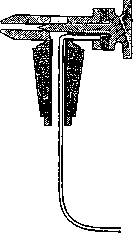
Figure 2. Device for the dropper plug.
the pulse and breathing, the condition of the pupils and the color of the face, lips and mucous membranes. Anesthetizing is a responsible duty of the doctor; therefore, it is desirable that N. be given by a doctor who is also responsible for N. In the USA and England, there are even special specialist anesthetists in all major surgical departments, perfectly mastering the technique of N. But on the whole scale, carrying out such a measure can hardly be considered advisable, as every doctor should be able to give N. Moreover, under conditions of insufficient medical personnel when working in a provincial setting and in the area, N. is very often entrusted to middle-level medical personnel, who under the guidance of a doctor learn to give N. well. If N. is not given by a doctor, then the doctor performing the operation is responsible for the preparation for N., for N., and for its outcome. Starting N., the eyes are covered with a towel, then a mask is applied to the face, and some pre-lubricate the face with vaseline, which protects against possible burns from the narcotic substance. The mask must cover the nose and mouth well. Then they begin to carefully drip the substance onto the mask. Chloroform should never be poured, it should be given drop by drop, approximately 10-16 drops per minute; children are given even less and more cautiously. In drunkards, in highly excited persons, the dose has to be increased, especially during the period of excitement. With the onset of deep sleep, dripping is done again less frequently, and the dose of chloroform should be reduced. Ether is also better given drop by drop, but it has to be dripped more often and in larger quantities than chloroform. The amount of ether or chloroform needed for N. is difficult to specify; it depends both on the subject being anesthetized (child, woman, man, alcoholic) and on the duration of the operation. For an average operation with a duration of N. of about 1 hour, on average about 150.0 of ether or about 40.0 of chloroform is required for an adult male. It is necessary to ensure that ether, or especially chloroform, does not get on the skin, or what is much worse, in the eyes, as this can lead to burns. With very strong excitement, it is better to remove the mask for 1-2 minutes and let the patient breathe calmly, otherwise he can inhale too large a amount of narcotic substance at once, which can lead to reflex paralysis of the heart and breathing. It is also not advisable during a period of severe excitement to hold the patient too tightly or to resist the movements with too much force: this can lead to injuries up to fractures. With deep sleep, wheezing or difficult breathing may occur, which depends on the falling back of the tongue: the muscles of the tongue relax, its root drops back and down, approaches the posterior wall of the pharynx and can thus close the entrance to the larynx. Breathing becomes sharply wheezing, intermittent, the face becomes cyanotic-blue, the neck veins swell (a picture known as "asphyxia"). -To eliminate such falling back of the tongue and to make breathing
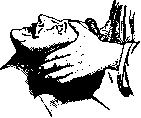
Figure 3. Correct protrusion of the lower jaw in case of falling back of the tongue during anesthesia.
For patients, it is necessary to protrude the lower jaw forward and hold it in this position, for which special techniques exist: place the hand flat on the auricle so that the tip of the index finger lies behind the angle of the lower jaw, and, pressing with the thumb on the temple and forehead, protrude the lower jaw forward so that the lower incisors are in front of the upper ones (figure 3). The protruded jaw can be held with one hand. In this case, one should not press too hard at the angle of the lower jaw so as not to compress the jugular vein. If with such protrusion of the jaw free breathing is not yet established, then it is necessary to open the mouth with a mouth gag and pull out the tongue, but to avoid damage to the teeth, the mouth gag should be inserted in advance. The pulling out of the tongue is done with the aforementioned instruments or with a strong thread passed through the middle of the tongue with a needle. If vomiting is observed during N., the head should be immediately turned to the side and a basin placed so that the vomit can flow freely. It is dangerous if vomit gets into the respiratory tract, then either direct suffocation can occur or later so-called aspiration pneumonia can develop from vomit getting into the trachea. Usually vomiting is observed at the beginning of N. and with incomplete anesthesia. As already indicated, the anesthetist observes the condition of the pupils throughout the entire N. In the first and second periods of N. the pupils are dilated and react weakly to light, the corneal reflex is preserved. At the beginning of the 3rd period with deeper sleep the pupils become narrower, reacting somewhat to light. Further, as N. deepens, the pupils increasingly narrow and (due to irritation of the n. oculomotorii) finally become as narrow as a pinhead and no longer react to light; this indicates very deep N., further strengthening of N. is already dangerous and unacceptable. N. should be maintained at the stage of deep sleep with narrowed pupils. If this limit is exceeded, still continuing N., the pupils again dilate due to paralysis of the sphincter, but do not react to light and do not narrow; in such a case, death from paralysis of the heart and breathing can quickly occur. Post-anesthetic 'hangover' can last from several hours to several days. More persistent vomiting depends on the fact that due to swallowing saliva and anesthetic vapors, the gastric mucosa is strongly irritated. In these cases, sometimes stomach washings with warm water or a one percent solution of soda help. While vomiting is observed in the patient, he should not be given to drink; if vomiting continues for a long time, then fluid (salt solution) should be administered enemas through the rectum. Sometimes after anesthesia, especially after prolonged, jaundice is observed, which depends on the toxic effect of chloroform on the liver and on the breakdown of red blood cells under the influence of chloroform. After inhalation N., as well as after other types of pain relief, postoperative bronchitis and pneumonia are observed in a number of cases. Ether N. more predisposes to pulmonary complications. Part of these pneumonias occurs from mechanical causes: the flowing of mucus and vomit into the respiratory tract (aspiration pneumonia) (see Postoperative pneumonia). In some severe cases, the toxic effect of N. is so strong that patients do not return to a normal state after anesthesia, the heart's activity is not restored, and patients die without apparent reason in the first days after N. In such cases we are dealing with 'late anesthetic death'; this anesthetic death, more often observed with chloroform, depends on a number of changes and degenerations of internal organs, mainly the heart, liver and kidneys. On autopsy in such persons, fatty degeneration of the heart muscle, fatty decay and necrosis of the renal epithelium and liver cells are usually found; sometimes with already fatty liver, a picture of acute yellow atrophy of the liver can occur. This late anesthetic death should be distinguished from death cases which can occur as a severe complication during the anesthesia itself. N. 'intoxication' or 'stupefaction'. Under this name is known a special type of inhalation anesthesia, convenient for small and short-term surgical operations. The method was developed by Sudeck and proposed by him for ether (Aether-xausch). In it, use is made of the first period of general anesthesia before the beginning of excitement. This first period is characterized by loss of sensitivity, and pain sensitivity disappears earlier than tactile - the analgesic stage (stadium analgeticum). This stage of complete insensitivity should be used and the required intervention quickly performed, since the analgesic stage lasts only for 2-3 minutes. Ether intoxication or stupefaction is most conveniently achieved with the drop method of etherization. The presence of analgesia is determined, for example, by the strangeness of the patient's answers: he loses count if asked to count, does not name his surname when asked, etc. This N. is simple and safe and is especially indicated in outpatient practice. After the analgesic stage of ether stupefaction, the period of excitement quickly sets in, the patient begins to move, to be agitated; this period is already completely unsuitable for interventions and, further, if the surgeon did not have time to use the insensitive stage, it is necessary to continue ordinary ether anesthesia. For brief intoxication, Manuilov (Grekov's clinic), based on the same considerations, proposed using chloroform as well. With such chloroform stupefaction after applying several drops of chloroform to the mask, which accustom the patient to its effect, after 1/2-1 min., about 3-5 g of chloroform are poured onto the mask and the mask is applied tightly. Now the period of loss of sensitivity begins, which the surgeon must quickly use. Severe complications of inhalation N. and measures to combat them. In addition to the fairly common ordinary complications of N., such as vomiting and falling back of the tongue, during narcotization severe complications can be observed, directly threatening life and ending in death in a number of cases. Every physician should be well acquainted with these dangerous complications and with measures to combat them; here calmness, discipline, speed and clarity of action are necessary. Severe complications include 1) cessation of breathing and 2) cessation of cardiac activity. Cessation of breathing. With an excessive dose of chloroform or ether, primary cessation of breathing can occur due to paralysis of the respiratory center. After several superficial and uneven breaths, breathing completely stops, the heart continues to beat, the pupils are dilated, the face is cyanotic. It is necessary to immediately stop N., remove the mask, ensure wide access to air, give a pillow with oxygen to inhale, and immediately begin artificial respiration. Previously, however, it should be ensured that the respiratory pathways are free; for this, the mouth is opened with a mouth gag, the tongue is pulled out, the oral cavity is wiped if necessary. The most commonly used methods of artificial respiration used in surgical departments are the methods of Silvester, Schiiller, and others (see Artificial respiration). Difficult breathing and asphyxia can also occur from mechanical causes, such as the entry of foreign bodies into the respiratory tract (dentures, jaws), for example, if the latter were not removed due to the anesthetist's oversight from the oral cavity before the beginning of N. Such foreign bodies after opening the mouth with a mouth gag are extracted with fingers inserted deeply to the larynx; in exceptional cases, tracheotomy should be resorted to. In the fight against asphyxia during N., the inhalation of carbon dioxide has also been proposed, which is a powerful irritant of the respiratory center. The carbon dioxide proposed by the Americans Henderson and Haggard is used successfully in our clinics as well. Carbon dioxide generally promotes rapid awakening of patients after N., improves breathing and can have a preventive effect on postoperative complications. The technique of using carbon dioxide for N. is simple and consists in inhaling this gas through the nose from a cylinder supplied with a manometer and filled with carbon dioxide. Instead of a cylinder, ordinary oxygen pillows can also be used. The physician should remember that if death during deep N. occurs from asphyxia and the respiratory pathways were not properly cleaned and appropriate measures were not taken, then the responsibility for the outcome falls on the physician. Cessation of cardiac activity. The most dangerous and formidable complications during anesthesia are observed from the side of cardiac activity. The fall and sudden cessation of cardiac activity (syncope) during anesthesia represents the most severe complication. It can occur without any precursors already in the first periods of anesthesia, even with the first drops of the anesthetic (idiosyncrasy to chloroform). The heart immediately stops beating, pulse and breathing instantly disappear, the pupils dilate and no longer react, the face is deathly pale.
Such a cessation of cardiac activity depends on paralysis of the cardiac center or on overexertion of the heart during the period of excitation. This can occur with a sharp change in the heart muscle (fatty degeneration) and in some general constitutional states of the body, for example, in the presence of a thymus gland that has not undergone involution (status thymico-lymphaticus). Then, cardiac arrest can occur reflexively from inhaling too large a quantity of anesthetic at once. In case of cardiac arrest, the mask and anesthetic substance must be immediately removed, and without losing a single second, artificial respiration should be begun, which, if cardiac activity does not resume, must be continued for at least 1-11/2 hours. Then, in addition to the subcutaneous administration of ordinary cardiac agents (camphor, caffeine, digalen, subcutaneous or intravenous infusion of physiological salt solution), heart massage should be performed, which can be done by the König-Maas method: standing on the left side of the patient facing the head, place the right hand flat on the chest over the heart area in strong dorsal flexion and perform quick, thrust-like movements with the hand (70-80 or more times per minute); the fingertips remain on the chest, while the thenar, hypothenar, and palm rise and fall. When the abdominal cavity is open, direct heart massage can be performed through the diaphragm according to Lane. For the same purpose, special exposure of the heart has been performed, first used by Tuffier; it is achieved by the thoracic route with resection of ribs, the subdiaphragmatic route (the abdominal cavity is opened by a median upper incision and the heart is grasped by hand through the diaphragm), and the transdiaphragmatic route (by inserting the hand through the diaphragmatic incision and grasping the heart directly by hand, rhythmic compression of the heart is performed 60-70 times per minute). There are known cases where such direct massage of the exposed heart was successful, and people who had actually died were brought back to life. According to the English summary statistics of 1924, the lives of 25 patients were saved by direct heart massage out of 101 cases published in the literature. According to Jurasz's statistics, out of 64 cases, life was saved in 13 cases (23.3%), and in 15 cases, a temporary success was achieved. The best results were given by Lane's diaphragmatic method: out of 26 cases, a favorable result was obtained in 11. Besides heart massage, an effective means of stimulating cardiac activity is the injection of adrenaline directly into the heart. The method is based on the direct effect of adrenaline on the heart muscle and the nervous apparatus of the heart. Intracardiac injections are performed as follows: the skin is smeared with iodine, a long (6-10 cm) hollow needle is inserted into the fourth or fifth left intercostal space next to the sternum; at a depth of about 2 cm, the posterior surface of the sternum is felt; here, the needle, directed slightly inward, encounters resistance from the heart muscle. At a depth of 3-5 cm, the needle is in the right ventricle; into it or into the heart muscle, 1-2 cm3 of a standard adrenaline solution (1:1,000) is injected. The injection of adrenaline should be made no later than 3-5 minutes after cardiac arrest. According to the anat.-topographic studies of Lisitsin, intracardiac injections should be performed in the 4th intercostal space in young subjects and in the 5th in elderly subjects. Death from heart paralysis with properly performed anesthesia, observing all precautions and taking appropriate measures, can never be blamed on the physician. N. with chloroethyl, bromoethyl, and nitrous oxide. Besides the commonly used chloroform and ether, there are also a number of agents proposed for inhalation anesthesia. Most of them, while having certain advantages, are still unsuitable for long operations and could not displace either ether or chloroform. With certain reservations, they can only be recommended for small, short-term interventions. Chloroethyl anesthesia. Chloroethyl (Aethylus chloratus, C2H5Cl), or chloroethyl, is a clear, colorless liquid that evaporates very easily. In commerce, there are glass tubes with a capacity from 10 cm3 to 100 cm3, equipped with an automatic shutter. The use of chloroethyl for anesthesia consists in directing a stream from the glass ampule onto an ordinary Esmarch mask. The patient inhales the evaporating chloroethyl and falls asleep unusually quickly (in 20-40 seconds) after a few deep breaths with almost no excitement. Analgesia sufficient for small operations sets in. Deep anesthesia is difficult to achieve; ether or chloroform must then be additionally given. Some surgeons recommend chloroethyl anesthesia for children for short-term interventions. An unpleasant property of chloroethyl is its ability to lower blood pressure. Alcoholics tolerate it especially poorly. Furthermore, the narrow margin between the hypnotic and toxic doses should also be considered dangerous.
Bromoethyl anesthesia. Bromoethyl, ethyl bromide (Aethylus bromatus), is a clear, colorless liquid that easily decomposes under the influence of air and light (therefore it should be stored in hermetically sealed dark bottles). Bromoethyl anesthesia is used as a stunning agent (Bromaethyl-rausch) for short-term anesthesia and as a beginning for chloroform or ether anesthesia. For long, deep anesthesia, bromoethyl is unsuitable, as it has no advantages over chloroform and ether and can cause severe complications and death. Anesthesia with nitrous oxide. Nitrous oxide, laughing gas (see), as already mentioned, was first used for anesthesia in 1844 by the American dentist Horace Wells and has since been frequently used in dental practice. Upon inhaling the gas, rapid sleep suitable for short operations occurs. With further inhalation of nitrous oxide, suffocation occurs, so for more or less prolonged anesthesia, laughing gas alone is unsuitable, which is why it is always given during anesthesia in combination with oxygen. For the practical application of this type of anesthesia, special, expensive apparatus with increased pressure, with large cylinders for nitrous oxide and for oxygen (similar to the Rot-Dreger apparatus and others, see below) (Figure 4) were constructed, especially in America. These apparatus and this type of anesthesia have not found significant application. Only recently, anesthesia with nitrous oxide and oxygen (nitrous-oxygen anesthesia) has again been strongly recommended by American authors and especially in Holland (by the clinic of Zaaijer in Leiden). Some authors consider nitrous-oxygen anesthesia the safest type of general anesthesia; its advantages are as follows: pleasant onset of anesthesia without the sensation of suffocation, calm, even sleep, rapid awakening after anesthesia within 1-3 minutes, extremely minor subsequent phenomena; vomiting rarely occurs. It is appropriate to mention here the narcylene anesthesia, recommended in recent years by some West European clinics (the clinic of Kirschner in Königsberg and Sudeck in Hamburg).
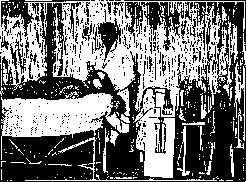
Figure 4. Apparatus for nitrous oxide anesthesia. Narcylene GENERAL
166 (see) is given for general anesthesia only in combination with oxygen and also requires complex and expensive equipment. As a narcotic, narcylene appears to be very good: it gives a peaceful sleep, does not affect the heart and lungs, and in this sense is a completely safe substance, not being a cellular poison like chloroform and ether; rapid and easy awakening is observed, with no side effects. Over 10,000 narcylene anesthesias have already been published. However, narcylene has one very important negative quality: it is flammable and capable of causing explosions. Due to such a great danger of explosion, narcylene anesthesia, which is still in the development stage, is not suitable for widespread use and should be applied only with great caution. Similarly to narcylene-acetylene, ethylene (Aethylen, C2H4) also acts, which is also used with great success in America for general anesthesia (2,000 ethylene anesthesias have been published by the Mayo clinic). This gas is also given only in combination with oxygen, with the same apparatus as narcylene, and has the same advantages and disadvantages as narcylene. Mixed and combined anesthesias. Special apparatus for anesthesia. Due to the danger presented by most substances used for general anesthesia, there was an effort, on one hand, to replace the most poisonous narcotics, such as chloroform, with other, less poisonous substances, or to use them in combination with other substances that correct or mitigate their harmful effects. On the other hand, by improving the technique of anesthesia, attempts were made to mechanize, refine, and if possible, reduce the amount of narcotic substance administered to the patient. Therefore, mixed and combined anesthesias began to be used, sometimes employing rather complex, but presenting a number of advantages, apparatus. Mixed anesthesia is understood to be one in which one anesthetic or hypnotic substance is given after another, either directly or after a certain interval of time. Of the mixed anesthesias, the simplest is anesthesia with a mixture of chloroform and ether—1 part chloroform + 3 parts ether, then with Billroth's mixture: 3 parts chloroform + 1 part ether + 1 part alcohol, and the so-called English mixture: 1 part alcohol + 2 parts chloroform + 3 parts ether (the English call this mixture A.C.E., after the initial letters of the substances in the mixture). The idea of these mixtures was, among other things, to weaken the harmful effect of chloroform on the heart by the stimulating action of alcohol and ether. The hopes placed on these mixtures and a number of others, in general, were not justified, and for example, alcohol can only be assigned the role of a diluent; similarly, the favorable effect of ether in mixture with chloroform is disputed by some researchers. All these mixtures of liquid narcotic substances have the disadvantage that we cannot take advantage at the critical moment of the specific properties of one of them. In this respect, it is more advantageous to use combined anesthesia. Here the most varied combinations are used: one should distinguish 1) combinations of inhalation anesthetics and 2) combinations of inhalation agents with the subcutaneous administration of narcotic substances.
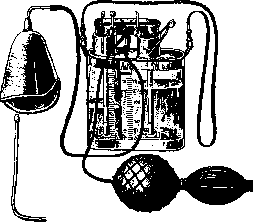
Fig. 5. Apparatus for combined anesthesia according to Braun. The simplest combination belongs to the first group—the sequential use of chloroform and ether. Anesthesia is begun with chloroform, then after deep sleep has occurred, a transition is made to ether. Such combined anesthesias are achieved conveniently with special apparatus. The simplest of these is Braun's apparatus, consisting of two vessels: one for chloroform, the other for ether; there is an arrangement for precise dosing of both substances; a special mask that fits tightly over the mouth and nose is connected to the apparatus by a rubber tube. The blowing of chloroform and ether vapors is done by a rubber bellows (fig. 5). For ether anesthesia, the Ombredanne mask-apparatus has been proposed, which is a hollow metal spherical vessel covered with flannel or felt. Into it, after opening the lid, 100.0-150.0 of ether is poured, which soaks the flannel. The lid is closed and the apparatus, which at the bottom has a mask that tightly covers the mouth and nose (fig. 6 and 7), is placed on the face. A visible arrow on the sphere regulates the flow of ether and can be set from 0 to 8 divisions. The apparatus, which is widely used in clinics in France, is extremely simple and convenient; it is used in a number of clinics in the USSR (Petrov, Zabludovsky, etc.). The most perfected apparatus for inhalation anesthesia is that proposed by Roth-Drager. When using this apparatus, chloroform and ether are given in combination with oxygen, which to a large extent eliminates the negative properties of chloroform. The apparatus consists of vessels containing chloroform and ether, with special regulators allowing precise dosing of the number of drops of narcotic substance per minute. In addition, there is a steel oxygen cylinder-bomb equipped with a manometer. The flow of gas is regulated by a cock; oxygen, passing through chloroform or ether, carries the vapors of these substances; a mixture with oxygen is obtained, which then goes to the mask; the latter is metal with a valve. Such apparatus for anesthesia under increased pressure is also good. The latter is necessary for many operations in the chest cavity, especially for operations on the lungs, on the thoracic part of the esophagus, etc. In order to avoid the dangerous collapse of the lung when the pleura is opened, air under a certain pressure in mixture with oxygen or the latter in its pure form is introduced into the lungs through the mouth, nose, and respiratory tract through a hermetically sealing mask. The pressure can be regulated. At the same time, chloroform or ether anesthesia is given with the same apparatus. In the combination of inhalation agents with the subcutaneous administration of narcotic substances, the most common, simple, and widespread method is the injection of morphine under the skin before beginning chloroform or ether anesthesia. In 1900, Schneiderlin recommended the use of scopolamine with morphine for anesthesia by injection. These substances produce a special drowsy state, during which operations can be performed, which is actually an attempt at the subcutaneous method of anesthesia. Such anesthesia has a number of disadvantages and dangers and in its pure form it is almost no longer used. In smaller doses, scopolamine-morphine is used as an auxiliary before chloroform or ether anesthesia. To mixed anesthesia should also be
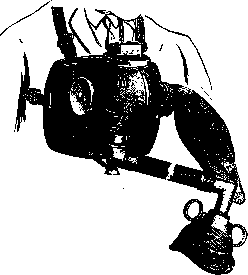
Fig. 6. Mask-apparatus Ombredanne for ether anesthesia with a chest strap for suspending the mask.
the use of magnesium sulfate (MgSO4) for the purpose of anesthesia. Magnesium was first used for this purpose by Meltzer in 1913. The practical application of the method was later proposed after the suggestion of a combination of morphine, magnesium sulfate, and
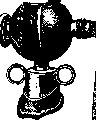
Fig. 7. Mask Ombredanne for ether anesthesia.
ether (Aitken). In such magnesium anesthesia, 1-2 hours before the operation, 2.0 to 4.0 g of a 25-50% solution of magnesium sulfate is injected intramuscularly into the gluteal region. At the same time or separately, the usual dose of morphine (0.01) is injected subcutaneously. Subsequently, ether anesthesia is given, with the consumption of ether being 2, istj,
is considerably less than with simple ether anesthesia. Sleep is calm, and excitement is usually absent. Yerkhun and Magazanik in Odessa in 1929 published their observations on 100 cases of mixed magnesium anesthesia during various operations and consider the introduction of magnesium sulfate before operation as a useful auxiliary method in general ether anesthesia. Finally, to combined anesthesia should be included those methods of pain relief where one or another method of local anesthesia is combined with general ether or chloroform anesthesia, which is quite often used in practice. This significantly reduces the amount of narcotic substance administered and thereby eliminates the harmful consequences of prolonged inhalation anesthesia. Intravenous Anesthesia. The possibility of intravenous administration of a narcotic substance (ether) in humans was first indicated by Burckhardt, who substantiated and developed this method. However, the Russian method of intravenous hedonal anesthesia, developed in Leningrad by S. P. Fedorov on the proposal of N. P. Kravkov, has much greater significance. For intravenous ether anesthesia, a 5% solution of ether is introduced into the exposed cubital vein. Sterile physiological saline solution or Ringer's solution is heated to 28°, then 50 cm3 of pure ether for anesthesia is added to 1,000 cm3 of the solution. This mixture is carefully shaken until the ether is completely dissolved. Then the ether solution, through a glass cannula connected by a rubber tube to a vessel, is slowly introduced into the central end of the vein. Anesthesia occurs easily, without unpleasant complications. The apparatus for intravenous administration of ether consists of two graduated vessels (Figure 8). The first vessel contains the ether solution, the second contains a clean saline solution. This apparatus allows alternating the administration of ether with clean physiological saline solution, which provides great convenience. Kummel improved the technique of intravenous ether anesthesia by combining ether with isopral. For such isopral-ether anesthesia, Kummel designed an apparatus with a third glass vessel containing an isopral solution. Intravenous Hedonal Anesthesia. Hedonal (see) is a hypnotic and narcotic substance. It has the advantage over other hypnotics and narcotics that even with complete hedonal anesthesia, cardiac activity is not noticeably weakened (Kravkov). Death from hedonal poisoning occurs from paralysis of respiration. Hedonal anesthesia was first used on humans in the clinic of S. P. Fedorov in 1909, after this anesthesia was experimentally developed in detail by Eremich on the proposal of Kravkov and Fedorov. Then this anesthesia was successfully used by Oppel, Bereznegovsky, Sidorenko, Polenov, Mukhadze, and many others, and by the time of the XIII Congress of Russian Surgeons in 1913, before the World War, Sidorenko could compile a summary of intravenous hedonal anesthesia based on his own material of 500 cases, 344 cases from Fedorov's clinic, and altogether on a collective statistics of 4,000 cases. At present, a number of clinics (Fedorov, Hesse, Gorash) again use this anesthesia. Thus, in 1922, Machulis from Fedorov's clinic published observations on 465 intravenous hedonal anesthesias, and Faykin from Hesse's clinic in 1928, based on collective statistics of 6,559 cases of hedonal anesthesia, reports 10 cases of death, but of these only 4 cases can be attributed to hedonal, which gives a mortality rate of 0.06%. Bayer's hedonal is prepared for intravenous anesthesia as follows: physiological saline solution is heated to 75°, in which hedonal is dissolved in a concentration of 0.75% (7.5 g of crystalline powder of hedonal are taken per 1,000 cm3 of solution); the solution is filtered 3 times through 8 layers of sterile gauze. The ready solution is collected in an apparatus for intravenous administration and brought to a temperature of 40°. The solution is administered into the exposed cubital vein through a cannula. Even simpler is the administration of the solution without exposing the vein directly through the skin by venipuncture (Hesse, Gorash). The administration is done slowly; the introduction of 800-1,000 cm3 of hedonal solution is sufficient. After the administration of hedonal, for a considerable time sleep occurs, pro
goat-lasting varying times. Excitement and vomiting usually do not occur. With deep anesthesia, tongue depression may occur, which can lead to respiratory disturbance, requiring the tongue to be pulled forward. Hedonal anesthesia transitions into a longer or shorter postoperative sleep lasting 3-6 hours, during which the patient must be under constant observation. The advantages of hedonal anesthesia include: 1) rapid onset of sleep without an excitement phase, 2) convenience for operations on the head, 3) weak effect on the heart and blood pressure (therefore applicable in severe, long operations in weakened subjects), 4) simultaneous administration of a significant amount of physiological saline solution, which further improves cardiac function, 5) absence of postoperative pain and unpleasant side effects in the form of headaches, nausea, and vomiting. However, along with its advantages, hedonal anesthesia also has a number of disadvantages: the technique is quite complex, thrombosis and embolism are possible, and disturbances in respiration, tongue depression, and asphyxia have been observed. Furthermore, hedonal anesthesia cannot be considered completely safe, as fatal cases have been reported; a total of 10 deaths have been described, of which 4 are undoubtedly the result of the action of hedonal (Faikin). Therefore, it should be considered that this method of general anesthesia, like all other methods, despite its great advantages, also has significant disadvantages; it should be used only for specific indications, mainly in severe and long operations in weakened patients with poor cardiac function, where inhalation ether and chloroform anesthesia are contraindicated, and local anesthesia cannot be used. Besides ether and hedonal, for intravenous anesthesia, in 1929 Kirschner in Tübingen proposed avertin (see), which is also used for rectal anesthesia. Kirschner uses a 3% solution of avertin, which is administered into a vein using a hollow needle at a rate of 0.03 avertin per 1 kg of the patient's weight. The solution should be at room temperature, as when heated to 50°C, avertin decomposes, losing its anesthetic properties. Complete and prolonged anesthesia is not achieved with intravenous administration of avertin; avertin stupor (Avertinrausch) is obtained, suitable for short-term interventions or as an introduction for subsequent ordinary inhalation ether anesthesia. Intravenous avertin anesthesia has not yet found widespread use. Kirschner tried it in 150 cases without complications. Attempts to obtain anesthesia by intravenous administration of pernocton, somnifen, and numal have not been successful. Their use is associated with a whole range of dangers; furthermore, with these agents, complete anesthesia cannot be achieved, so they should not be used intravenously to produce anesthesia. Rectal Anesthesia. The introduction of a narcotic substance through the rectum was proposed by Pirogov in 1847; he administered ether in vapor form and was satisfied with the results obtained on humans. However, despite this method being proposed so long ago, it has not gained widespread use. Ether can be introduced into the rectum in vapor form, as Pirogov proposed, or in a mixture of ether with oil as ether-oil enemas, which was proposed by the American doctor Gvetmi in 1913. The latter method found a number of followers among Russian surgeons. Rectal anesthesia with ether vapor was used in the clinics of Kadyan and Petrov; Krotkina published the results of these clinics with rectal anesthesia (122 cases). The technique used was as follows: the patient is prepared for anesthesia for 3-4 days; liquid food, laxative; enema the day before the operation and cleansing enema to clear water 5 hours before the operation. 2 hours before anesthesia, 10 drops of tincture of opium are given, and 1/2 hour before - morphine (0.01). Krotkina advises starting anesthesia with ether per os, and when the patient falls asleep, switch to rectal anesthesia, for which a glass flask with a capacity of 300 cm³ with a rubber stopper through which a short glass tube is passed is used. From the tube comes a drain that is connected to a rubber probe inserted into the rectum 10-15 cm. Ether is poured into the flask in small amounts of 10-15 cm³, and the flask is placed in a vessel with hot water. The ether in the flask begins to boil, and the vapors are conducted into the rectum. For 1 hour of anesthesia, usually 30.0 of ether is sufficient. The anesthesia conducted in this manner proceeded calmly and well. The advantage over ether-oil anesthesia is the small amount of ether used and its gradual introduction, as in inhalation anesthesia. A sharply negative aspect of such rectal ether anesthesia is the irritation of the large intestine by ether vapors: in two cases of Krotkina, acute colitis with fatal outcome was observed, which was undoubtedly (according to autopsy) associated with rectal ether anesthesia. Ether-oil rectal anesthesia was used by Russian surgeons. After thorough cleansing of the intestine and determining the patient's weight, 0.01 of morphine is injected 1/2 hour before anesthesia. The ether-oil mixture is administered at a rate of 1.0 of ether pro narcosi + 1.0 of oil, either provence or sesame, per 400 g of the patient's weight. Others take a certain amount of ether and oil, for example, 180 cm³ of ether + 60 cm³ of provence oil. The mixture is introduced into the rectum using an ordinary Esmarch's enema can with a soft tip. The mixture is introduced slowly, over 3-5 minutes. Sleep occurs approximately 30-40 minutes later, so it is better to administer the ether-oil enema in the ward, and when sleep occurs, the patient is then transferred to the operating room. At the end of the operation, any remaining ether and oil must be washed out of the rectum with high enemas several times until the smell of ether disappears from the wash water. Authors recommending this anesthesia praise its calm course; excitement is almost never observed, and sleep is deep and prolonged. Anesthesia is convenient for operations on the head and neck. However, along with its known advantages and relatively simple technique, this type of anesthesia cannot be considered safe; Manuilov reports 7 deaths in 471 anesthesias, which is a very high percentage. Major disadvantages also include the inability to regulate anesthesia and to dose the administered substance; then marked bloating of the intestine with a reflex effect on the heart, depressing its function, and hemorrhagic colitis were observed. In general, this anesthesia must be approached with caution, and it has not gained widespread use. Recently in Germany, a new agent, avertin (see), has been proposed for rectal anesthesia. Avertin dissolves in water heated to 40°C. The solution, cooled to body temperature, is introduced into the rectum through a rubber tube. 0.1-0.15 of avertin is taken per 1 kg of the patient's weight. Reports in foreign literature about the new anesthesia with avertin are favorable. Nordmann, Kreuter, and others report on many hundreds of cases of rectal avertin anesthesia with good results. Silberberg collected in 1928 a summary statistics from 35 authors with a total of over 7,000 anesthesias with avertin. Sleep occurs already after 3-10 minutes, and excitement is usually absent. However, in a number of cases (up to 20%), semi-anesthesia was observed, requiring switching to ether anesthesia. Cases of death have been described, which calls for caution with this new agent. At the surgeons' congress in Leningrad in 1929, the question of rectal avertin anesthesia was also discussed based on the experience of several Russian surgeons. Zhorov and Nikolaev reported on their clinical observations with avertin anesthesia, Nikolaev had 2 cases of death. The speakers and those who participated in the discussion approached rectal avertin anesthesia with restraint. The question of this anesthesia has not yet moved beyond the stage of development. Mortality during anesthesia, indications and contraindications and comparative evaluation of various methods of general anesthesia. We do not know of completely safe anesthetic agents. The dangers and complications that occur with various methods of general anesthesia have been mentioned above in the description of various anesthetic methods. Here we should also give the mortality rates for various anesthetic agents. The statistics of authors in this regard show significant discrepancies, so it is better to use large summary statistics. Most often, the data obtained by Gurlt based on a huge carefully collected international material on 327,593 anesthesias (1890-97) - with chloroform and ether - are used. Gurlt's statistics give a mortality rate of 1:2,075 for chloroform anesthesia and 1:5,112 for ether anesthesia. A more recent statistics by Neuber (1908) on smaller numbers gives approximately the same ratios: for chloroform 1:2,060, and for ether 1:5,930. These figures are probably underestimated, especially for chloroform anesthesia, since not all fatal cases from anesthesia are included in the statistics, and moreover, the statistics of individual authors sometimes give a higher mortality rate. All statistics show that ether is significantly safer than chloroform, therefore, under other equal conditions, it undoubtedly deserves preference over chloroform; there are a whole series of clinics and hospitals in the USSR, Europe, and America that use exclusively ether for all operations under general anesthesia.
As for intravenous hedonal anesthesia, from the figures given above, there are 3 deaths per 4,000 cases, or 1:1,333, i.e., the mortality rate is still higher than with chloroform anesthesia. With various methods of mixed anesthesia, especially when using improved apparatus of the Rot-Dreger type, the overall mortality rate for chloroform and ether is undoubtedly further reduced. For rarer types of anesthesia, which are still partly in the development stage, such as nitrous oxide, narcylene, and others, more precise and extensive statistics cannot yet be provided. In view of the dangers that any general anesthesia still presents, and in view of possible complications, general anesthesia is contraindicated in the following cases: 1) in poor general condition of the body, in general diseases that reduce the body's resistance (diabetes, anemia, leukemia, severe obesity), in some constitutional anomalies (for example status thymico-lymphaticus); 2) in diseases of the heart, vascular system, lungs, and kidneys (nephritis) and 3) in conditions with severely lowered blood pressure, for example in fainting, shock, after significant blood loss. Furthermore, anesthesia is undesirable in very elderly people (after 60 years). As for the question of the permissibility of general anesthesia in tuberculosis, it should be noted that in severe forms of pulmonary and pleural tuberculosis, as generally in severe pulmonary diseases, general anesthesia is contraindicated, but in tuberculosis of other organs and in numerous forms of bone and joint tuberculosis, general anesthesia is tolerated quite well. In all cases where general anesthesia is contraindicated, if necessary for surgical interventions, various methods of local and spinal anesthesia should be used (see Local Anesthesia). The methods of local anesthesia for various operations, including abdominal ones, are now so developed that many surgeons use local anesthesia not only in cases where general anesthesia is contraindicated, but generally for all operations that can be successfully performed under one or another form of local anesthesia, leaving general anesthesia as the more dangerous option only for those operations where the use of local anesthesia is inconvenient or contraindicated. In conclusion, it should be noted that at the current level of our knowledge, among all types of anesthesia, simple inhalation anesthesia with ether undoubtedly occupies first place in terms of safety and simplicity of application. Chloroform, being more dangerous and having a greater effect on the cardiovascular system and parenchymal organs, stands significantly lower and has taken a secondary place, but in terms of simplicity of application and ease of achieving deep anesthesia, chloroform still remains an extremely important means for general anesthesia. Anesthesias with nitrous oxide, narcylene, and some other gaseous agents, which are currently popular in the West and America as particularly safe, are not widely available for mass use, since their use involves expensive and complex apparatus. Intravenous anesthesias, especially hedonal anesthesia, while having a number of advantages, could not significantly displace the much simpler and no more dangerous inhalation anesthesia with ether or even chloroform. This applies even more to rectal anesthesias, among which avertin anesthesia should be preferred, although the latter type of anesthesia is still in the development stage and avertin is not yet widely available.
Related articles
Mentioned in
Cite this page
“General Anesthesia.” Soviet Medical Encyclopedia. English translation of Bolshaya Meditsinskaya Entsiklopediya, 1st ed. (Moscow, 1928–1936), ed. N. A. Semashko. https://sovietmedicalencyclopedia.pages.dev/article/general-anesthesia/