Brain (cerebrum, a comprehensive term for the entire)
Historical document, translated for reference. It reflects medical knowledge of the 1920s–30s and is not medical advice.
Summary
The brain is a comprehensive term for the entire central nervous system, divided into the brain and spinal cord. It consists of gray and white matter, is covered by three meninges, and contains various nuclei and pathways.
Encyclopedia article (1928–1936)
BRAIN, cerebrum, a comprehensive term for the entire central nervous system. The brain is divided into two main parts: the brain and spinal cord (see); the first is located in the cranial cavity, the second in the spinal canal; the boundary between them passes through the lower level of the medulla oblongata (the lower end of the pyramidal decussation); on the skeleton, this boundary corresponds to the upper edge of the C1 vertebra. The brain in turn is subdivided into cerebral hemispheres, brainstem, and cerebellum (see) (see diagram and separate tables). The brainstem includes the medulla oblongata, pons Varolii, and cerebral peduncles (see). Based on the ontogenetic development of the brain (ontogeny - see Nervous system, Brain and Spinal cord), from various vesicles of the neural tube, it is divided into a number of sections (see separate table and figure); during development, the brain vesicles undergo significant changes, but the cavities of these vesicles do not disappear, but remain in the developed brain in the form of ventricles, aqueduct of Sylvius (see), and the central spinal canal (see Ventriculi cerebri). The entire brain is covered by three meninges (see Meninges), between which are spaces filled with cerebrospinal fluid (see); it also fills the brain ventricles. The brain receives blood mainly from three cerebral arteries: branches of the vertebral and internal carotid arteries; in the spinal cord (see), branches of the vertebral artery are reinforced by branches of the aorta. The brain is composed of gray and white matter, i.e., nerve cells and nerve fibers (see); its intermediate tissue consists of neuroglia (see). The entire surface of the cerebral hemispheres and cerebellum is covered with a layer of gray matter forming the cortex; the structure of the cerebral cortex is not uniform, but shows local differences [see Architectonics of the cerebral (large) cortex]; accumulations of gray matter under the cortex form subcortical nuclei or * In pharmacies there is also 01. Juniperi ligni; its action is almost the same, but it is cheaper. basal ganglia, thalamus opticus (see); in the brainstem part, gray matter forms nuclei, while in the spinal cord it forms horns.
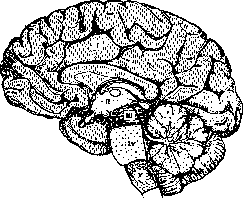
Different parts (of the brain and spinal cord: I-telencephalon-cerebral hemispheres, II-diencephalon-interbrain; III-mesencephalon-midbrain; IV-metencephalon-hindbrain; V-myelencephalon-medulla oblongata; VI-medulla spinalis-spinal cord; A-cervical region; B-thoracic; C-lumbosacral; 1-1st cervical root; 2-1st thoracic root; 3-lateral column of spinal cord; 4-1st lumbar root; 5-1st sacral root.
In the brainstem are located the nuclei of the last 12 cranial nerves from III to XII (see separate table, fig. 3), which begin or end in these nuclei; the first cranial nerve begins in the olfactory plate of the nasal cavity, and the second - in the retina of the eye (see Visual pathways, centers).
\ Fibers leaving or entering the spinal cord form its roots. Through intracerebral fibers, all parts of the brain are closely connected: association fibers (see) connect different parts of the same cerebral hemisphere; commissural fibers (see) connect both cerebral hemispheres (see Corpus callosum). Fibers connecting the higher parts of the brain with the lower parts and with the periphery are designated as projection fibers or conducting pathways (see); areas in the cerebral cortex where they begin or end are called projection motor, resp. sensory centers of the cortex (see separate table, fig. 1, 2, 4 and 5 and figures in the article Brain). In addition to projection fibers, GOLOVNO
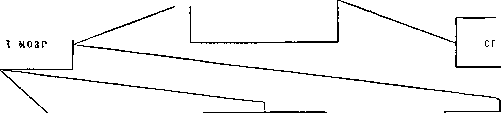
! И H H O И M O 3 Г Prosencephalon Forebrain Mesencephalon Midbrain Telencephalon Endbrain Diencephalon Interbrain Hemispheres Pars optica hypothalami Par mammillaris hypothalami Lamina terminalis Chiasma opticum Rhombencephalon Diencephalon Thalamencephalon Tuber cinereum L Infundibulum Corpora mammillaria Hypophysis Epithalamus
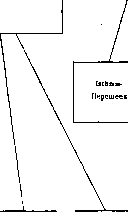
Rombencephalon Rhombencephalon Metencephalon Hindbrain Pedunculi cerebrae Cerebral peduncles Corpora quadrigemina Quadrigeminal bodies
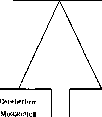
Myelencephalon Pons Varolii Medulla oblongata Pineal gland going from the cerebral cortex and directed to the spinal cord, there is a whole series of projection fibers beginning (resp. ending) in the subcortical ganglia, in the cerebellum, in the nuclei of the brainstem, in the spinal cord; these fibers form the so-called extrapyramidal system, while the first is called the pyramidal system. Both of these systems end in the cells of the anterior horns, from which begin the anterior or motor roots going to the muscles. Physiology and pathology of the brain - see Nervous system, Brain, Cerebellum, Conditioned reflexes, Pons Varolii, Medulla oblongata, all sense organs and T.D.
E. Kononova. BRAIN-LIKE, resembling the brain; in this case, reference is made to the brain of a newborn, which differs by its gray-red color, looseness, and juiciness. Brain-like appearance is a sign of an increase in cell mass, which is particularly frequently observed in various inflammatory and neoplastic processes associated with cell proliferation. Thus, one speaks of brain-like swelling or brain-like infiltration of Peyer's patches, plaques, and lymph glands in typhoid fever, of brain-like cancers, etc.
Related articles
Cite this page
“Brain (cerebrum, a comprehensive term for the entire).” Soviet Medical Encyclopedia. English translation of Bolshaya Meditsinskaya Entsiklopediya, 1st ed. (Moscow, 1928–1936), ed. N. A. Semashko. https://sovietmedicalencyclopedia.pages.dev/article/brain/